
Marriage Linked to Lower Cancer Risk In Study of 4 Million Cases
Adults who have never been married are at a significantly higher risk of developing cancer than those who are married or have been in the past, new research suggests.
A team from the University of Miami found that incidence rates of cancer were 68 percent higher in never-married men and 85 percent higher in never-married women.
Those are big differences. However, the researchers are keen not to frame their findings in a way that suggests marriage prevents cancer, or that you should try to tie the knot as soon as possible to protect your health.
Behind the headline figures is a much more nuanced story. Cancer tumors don’t detect marital status before spreading, but plenty of cancer risk factors – including smoking, stress, and whether you’ve given birth to children – are also connected to being married or not.
The researchers also suggest that healthier people could be more likely to opt into marriage to begin with. For the purposes of the study, couples living together in romantic partnerships without tying the knot were classified as unmarried.
“It means that if you’re not married, you should be paying extra attention to cancer risk factors, getting any screenings you may need, and staying up to date on health care,” says clinical psychologist Frank Penedo.
“For prevention efforts, our findings point to the importance of targeting cancer risk awareness and prevention strategies with attention to marital status.”
The statistics come from an analysis of over 4 million cancer cases across 12 US states, logged between 2015 and 2022 for people aged 30 and older. This was a ‘single snapshot’ study – the effects of marriage on cancer rates weren’t monitored over time.
Some of the biggest differences were seen in anal cancer for men (around five times the rate in never-married men, compared to men who were married or who had been previously), and cervical cancer in women (nearly three times the rate in never-married women, compared to women who were married or who had been previously).
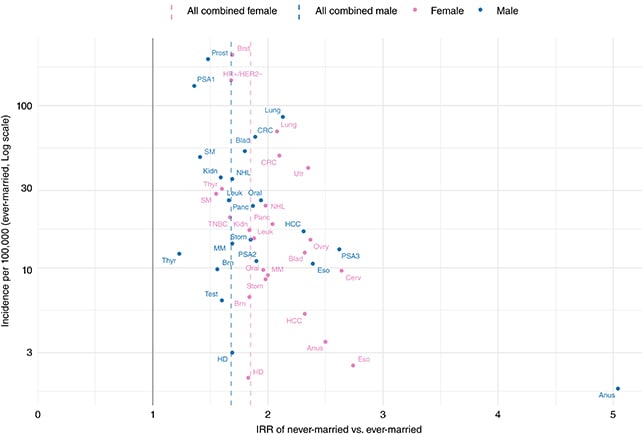
These two diseases are closely linked to the sexually transmitted human papillomavirus (HPV), where having a partner to nudge someone into getting checked out could make a difference. For cancers with a high level of organized screening (such as breast or prostate), the differences weren’t as great.
The study wasn’t particularly precise in its categorization – those who had been happily married for 30 years would be put in the same ‘bucket’ as those who had been unhappily married for two years and divorced for 28, for example – but the marriage connection is an interesting and little explored one for researchers.

“It’s a clear and powerful signal that some individuals are at a greater risk,” says Penedo.
Other studies have found that singleness comes with its own benefits, including more close relationships and greater opportunities for personal growth, so, as always, the research needs to be put in context.
There has also been evidence that marriage has its downsides – with a higher risk of dementia attached, for example. It’s not simply that marital status, one way or the other, is the healthier option.
Related: There’s a Science to The Perfect Rom-Com. An Expert Explains
“These findings suggest that social factors such as marital status may serve as important markers of cancer risk at the population level,” says epidemiologist Paulo Pinheiro.
The research has been published in Cancer Research Communications.
What did you think of this news? Leave a comment below and/or share it on your social media. This way, we can inform more people about the hottest things in technology, science, innovation, and gaming!
This news was originally published in:
Original source
