
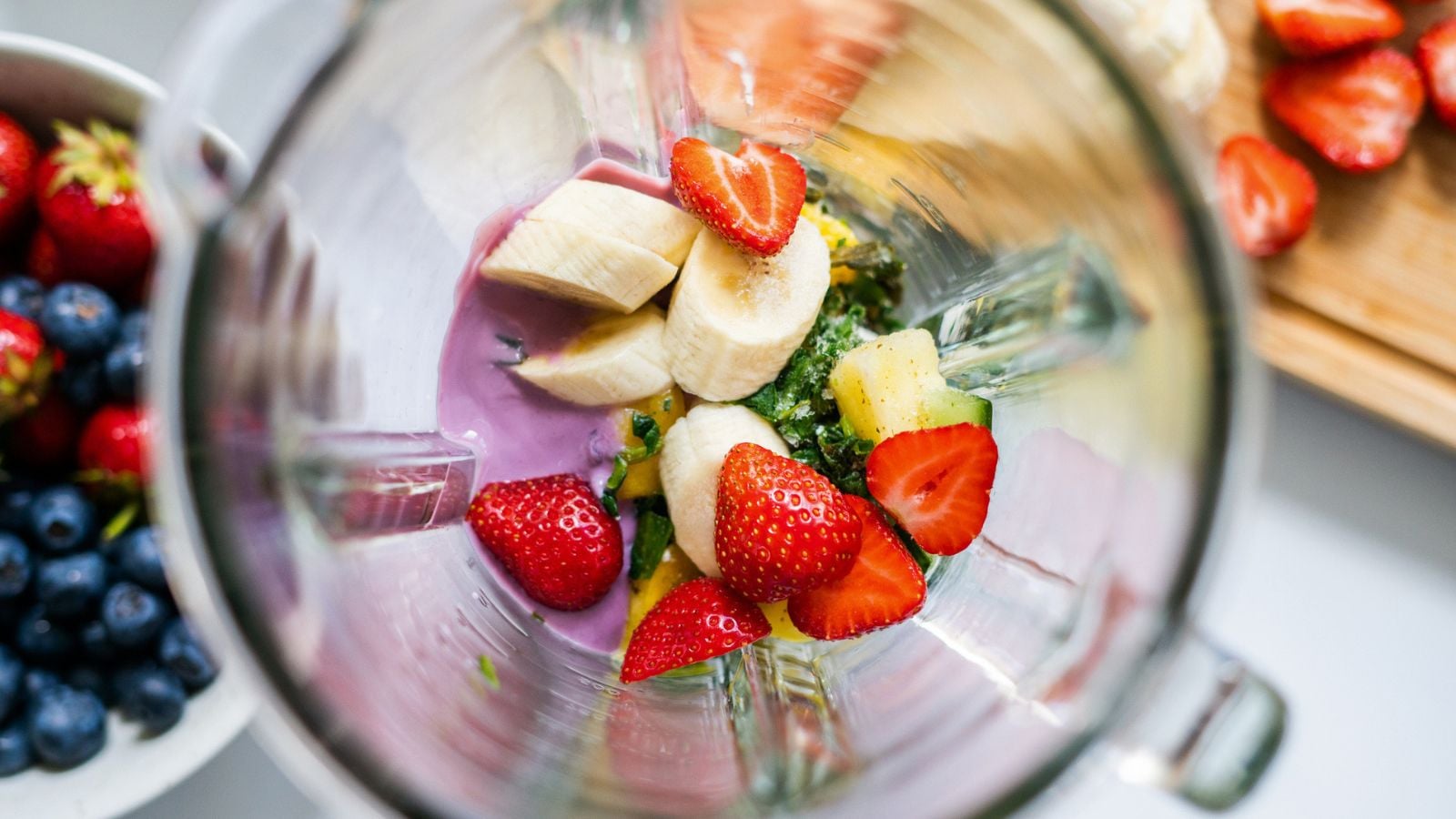
This One Fruit May Reduce The Nutrients in Your Next Smoothie, Experiments Suggest
Next time you’re making yourself a berry smoothie, you might want to hold off on the banana.
Sure, it’s full of potassium and makes a drink deliciously thick and creamy, but it could actually be impacting the nutritional benefit of your fruity drink.
According to research from the University of California, Davis (UCD), there’s something in bananas that might overpower the antioxidants in berries.
The antioxidants in this case are called flavonols.
They are found in plant-based foods like berries, tea, cocoa, apples, pears, and peaches, and many of us do not get enough of them in our diet.
When a person eats food rich in flavonols, the compounds are rapidly absorbed into the bloodstream, where they are processed.
The resulting metabolites have been associated with benefits like improved cardiovascular health and cognitive function.
But experiments suggest that when just a single banana is added to a berry mix, these metabolites are not nearly as abundant.
In a controlled, blinded study published in the journal Food and Function in 2023, researchers at UCD gave a small group of eight participants either a flavonol-rich berry smoothie or a simple flavonol capsule.
Tests later showed an increase in levels of the flavonol metabolites in their blood.
When volunteers consumed a banana-berry smoothie, however, the metabolites in their blood were 84 percent lower than after a pure dose of flavonol.
“We were really surprised to see how quickly adding a single banana decreased the level of flavonols in the smoothie and the levels of flavanol absorbed in the body,” said nutritionist Javier Ottaviani from UCD at the time.
“This highlights how food preparation and combinations can affect the absorption of dietary compounds in foods.”
The reason why bananas have this effect on flavonols probably has to do with an enzyme called polyphenol oxidase (PPO), which is involved in the oxidation process that turns bananas brown when they’re peeled.
Exposed to the banana, the antioxidants ‘mop up’ PPO, preventing them from doing all that good work inside our bodies.
When a banana-berry smoothie with high PPO was left at room temperature in experiments, researchers found it contained fewer flavonols than a pure berry smoothie after an hour of sitting.
When PPO in the bananas was inhibited, however, the flavonols persisted.
This suggests that PPO can limit the availability of flavonols before they enter the human body.
To see if bananas can ‘disarm’ antioxidants in the stomach, too, researchers had 11 participants consume two separate drinks at the same time: a banana drink and a berry drink.

This prevented PPO from interacting with the flavonols before ingestion. Even still, researchers found that flavonol metabolites were not as present in participants’ bloodstreams after drinking the two smoothies separately, compared to when they drank none of the banana drink.
Related: A Mix of These Specific Foods Could Help You Avoid Chronic Disease
The research was only conducted among a small number of male participants; however, researchers at UCD think that their initial findings deserve further scientific attention.
“[T]his study highlights that consideration needs to be given not only to the types of fruits and vegetables and plant-based products to recommend to increase intake, but also how they are prepared, stored, and consumed as part of a regular meal in order to maximize their potential to support health,” the researchers conclude.
The study was published in Food and Function.
This article was fact-checked by Jess Cockerill and edited by Rebecca Dyer. While we pride ourselves on our process, we are only human. If you spot a mistake, please let us know.
What did you think of this news? Leave a comment below and/or share it on your social media. This way, we can inform more people about the hottest things in technology, science, innovation, and gaming!
This news was originally published in:
Original source
