
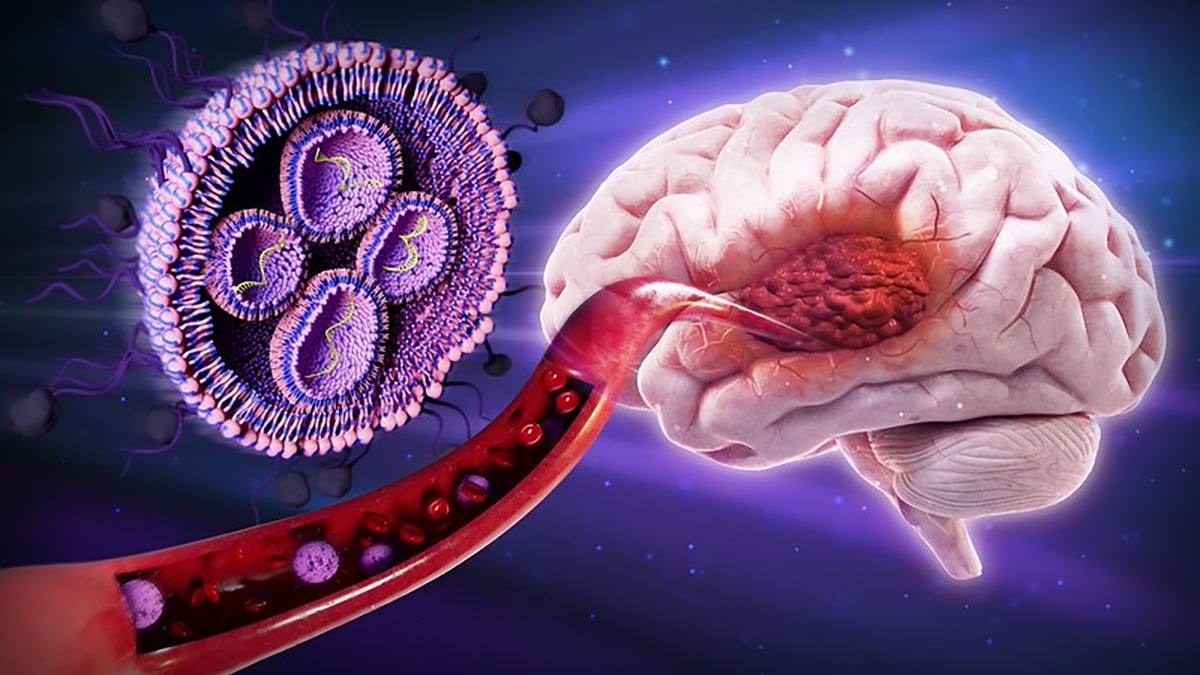
Sugar-Coated Nanoparticles Shrink Deadly Brain Tumors in Mice
Cancers don’t come much worse than the brain cancer glioblastoma, and it is notoriously difficult to treat. Even with surgery, radiation, and chemotherapy, fewer than 30 percent of patients are alive two years after diagnosis.
Scientists are busy hunting for treatment approaches that can improve those survival rates, and a team from Oregon State University has now found a potential new angle for attacking these tumors: sugar-coated nanoparticles.
As detailed in a mouse study published in the Journal of Controlled Release, the sugar ‘disguise’ used by the nanoparticles helps them cross the blood-brain barrier to the site of cancer, while also directly targeting glioblastoma and avoiding measurable toxicity in major organs.
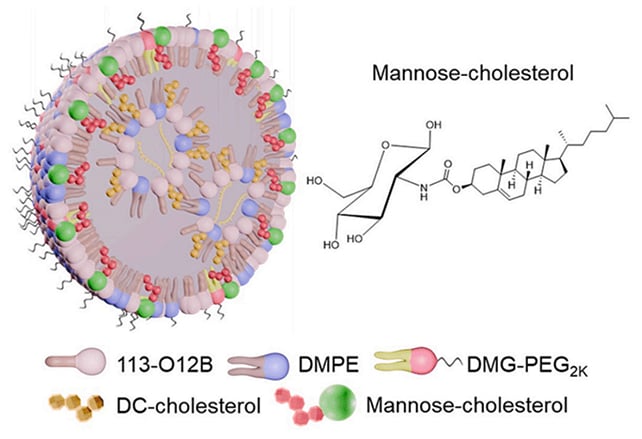
The particular type of sugar is important too: The researchers used mannose, which is closely related to glucose. Both glucose and mannose get permission to pass through the blood-brain barrier as energy sources, via a transporter molecule called GLUT1.
“Blood contains relatively high concentrations of glucose, and that’s what the nanoparticles are competing against for GLUT1’s attention,” says pharmaceutical scientist Oleh Taratula.
“For the nanoparticles to get it, they need a densely coated sugar surface, and that’s our central innovation.”
The key to the trick was linking mannose to the cholesterol that serves as the main building block of the nanoparticles. This meant that much more sugar could be loaded into each packet, making them more appealing to GLUT1 and the blood-brain barrier.
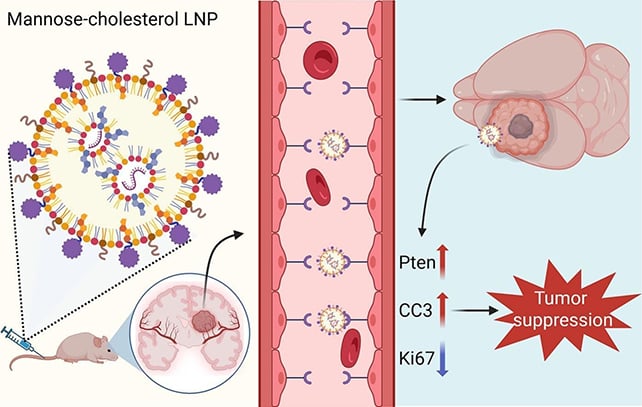
In mouse model experiments, sugar-coated nanoparticles reached the brain 9.9 times more effectively than uncoated nanoparticles. At that point, the second benefit of the mannose comes into play: Glioblastoma tumors can’t get enough sugar.
That means the nanoparticles build up right where they’re supposed to be delivering their cargo of messenger RNA (mRNA) – genetic instructions telling cancer cells to start producing the tumor-suppressing protein PTEN.

“Glioblastoma is metabolically reprogrammed and expresses GLUT1 at three times the levels of normal brain tissue, so the particles preferentially accumulate in tumor tissue after crossing the blood-brain barrier,” says drug delivery scientist Olena Taratula.
“And restoring PTEN expression in tumor cells reinstates growth control. Across repeated dosing, tumor shrinkage occurred without any measurable organ toxicity.”
The end results were positive. In untreated mice, an average of 52 percent of the mouse brains were occupied by a tumor after 28 days; for the mice treated with the sugar-coated nanoparticles, that tumor burden fell to just 2.3 percent on average.
Median survival time was also extended in treated versus untreated mice, from 33 to 49 days. This didn’t act as a cure, but it significantly improved survival time.
That these experiments were limited to mice is one of the bigger caveats here, and we’ll need to see how this works in human brain cells – and with real glioblastoma – to get a better idea of how much potential it has as a cancer treatment.
However, these are promising early results, and the efficiency with which the sugar coating solves not one but two problems is notable.
We’re now starting to see more and more inroads made in terms of glioblastoma treatment, whether it’s nasal drops that inhibit tumor growth pathways, or a technique to supercharge the immune system response.
What’s more, the researchers think their sugar-coated parceling approach could be used beyond brain cancers too – ensuring reliable, customized delivery of medicines across the blood-brain barrier to where they’re needed in the brain.
Related: The ‘Breaking Bad’ Effect From Cancer Is Real, Study Finds
“Beyond glioblastoma, this cholesterol-based high-density functionalization strategy establishes a generalizable platform for brain-targeted mRNA therapeutics,” write the researchers in their published paper.
“These findings establish mannose-cholesterol lipid nanoparticles as a promising translational platform for mRNA-based therapy of glioblastoma and potentially other neurological disorders requiring therapeutic intervention in the brain.”
The research has been published in the Journal of Controlled Release.
This article was fact-checked by Clare Watson and edited by Rebecca Dyer. While we pride ourselves on our process, we are only human. If you spot a mistake, please let us know.
What did you think of this news? Leave a comment below and/or share it on your social media. This way, we can inform more people about the hottest things in technology, science, innovation, and gaming!
This news was originally published in:
Original source
