
Geologists Went Looking For Gold. They Found Something Far Rarer.
When you’re prospecting for gold, sometimes you can find treasure of a different kind.
That’s what happened in the desert of Western Australia, where geologists looking for deposits of the precious metal found something far rarer.
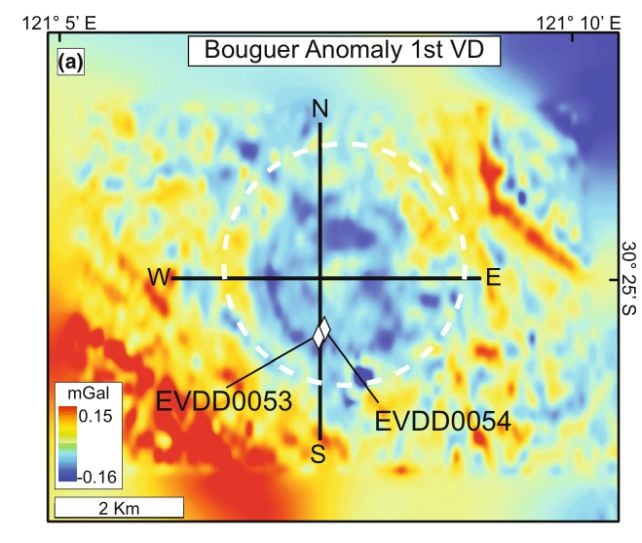
What started with a routine survey took a strange turn when gravity data revealed a peculiar circular anomaly hidden beneath the landscape of the region’s Eastern Goldfields.
As they dug deeper, they found evidence of an ancient catastrophe powerful enough to melt rock, deform crystals, and blast gold-bearing debris high into the air.
That event, researchers now believe, was an impact of an iron-rich meteorite sometime before the Early Cretaceous sediments that later buried it, leaving a scar now almost totally erased by the ravages of time.
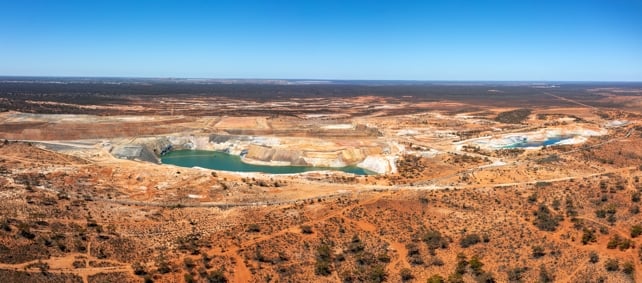
While meteorite craters on Earth are already a rarity, this one, temporarily named the Ora Banda impact structure, is even more special, says a team led by geologist Raiza Quintero of the University of Puerto Rico.
It’s only the second confirmed impact structure known to have formed entirely within Archaean greenstone – some of the most ancient rock formations on the planet.
Meteorites are thought to have played a catalytic role multiple times over the course of Earth’s history. The famous event many know about is the Chicxulub impact that ended the reign of the dinosaurs and ushered in a new age of mammals – but that’s far from the only meteoritic influence.
Scientists think that, early in the Solar System’s history, the inner planets were subjected to a period of heavy meteorite bombardment that may have delivered important ingredients to Earth, such as water and the molecules that later came together to form life.
Impact events may have also helped shape our newborn world – as well as the other rocky planets with which it shares a star.
But little evidence remains of that violent time. Erosion, tectonic activity, and other geological processes erase many of the scars that impacts leave behind.
Ora Banda offers a glimpse of how difficult those scars can be to recognize.
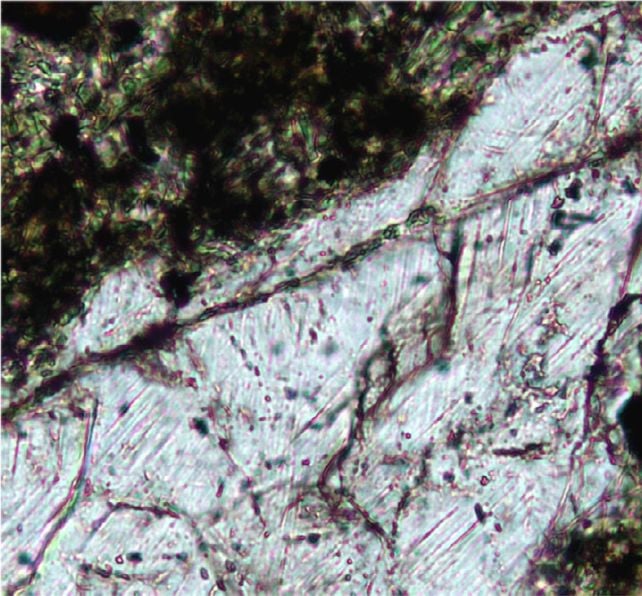
Despite being geologically younger than the ancient rocks it struck, the crater had lost almost all of its obvious surface expression. Researchers only identified it through gravity surveys, drill cores, and microscopic signs of shock damage hidden in the rocks.
The first signs emerged when gravity surveys revealed a circular feature of denser rock, buried beneath the desert’s surface.
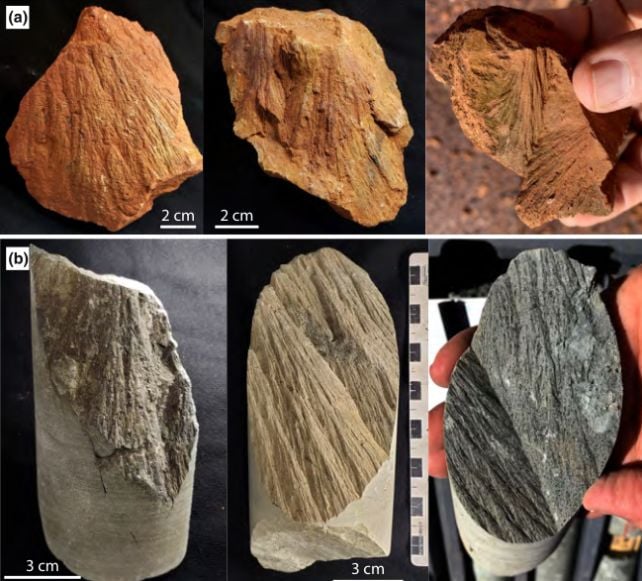
Further exploration, including exploratory gold drills, yielded more strange clues. The first was a type of formation called shatter cones, found in surface outcrops and drill cores.
These are one of the key diagnostic features of an impact site, created when an impact sends a powerful shockwave through the ground, leaving distinctive cone-shaped fracture patterns in the rock.
While that’s usually considered something of a smoking gun for an impact scar, what the researchers found when they excavated samples from beneath the surface confirmed it.
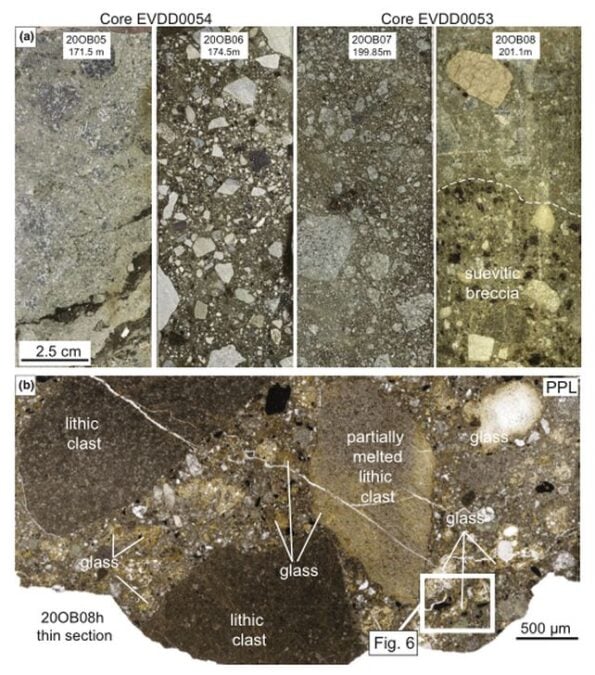
Underground, concealed by the clay-rich surface layer of the desert, they found impact breccias.
Breccias are rocks that are a little bit like a fruit pudding, with lots of chunks of rock glued together by smaller grains.
Breccias can form in several different ways, but they’re especially common at impact sites, where enormous pressures shatter rocks and weld the fragments back together into chaotic mixtures.
These new configurations often contain tiny blobs of glass – silicate material that was melted in the heat of the impact and incorporated into the impact breccia.
Analysis of these glass blobs can reveal traces of the impactor by comparing their chemistry with that of the surrounding rocks and the chemical fingerprints of known meteorite types.
And this is where the picture truly emerged.
The glasses had much higher levels of nickel, cobalt, iridium, platinum, palladium, and rhodium than the surrounding rocks. These elements are known as siderophiles – metallic elements that dissolve readily in iron.
They’re relatively rare in Earth’s crust, but much more abundant in meteorites – particularly meteorites that are rich in iron.
The researchers believe that, taken together, the clues point to the impact of an iron-rich meteorite that left behind an underground structure consisting of a central region and a series of concentric rings extending to a diameter of about 4 kilometers (2.5 miles).
Meanwhile, tiny nuggets of gold found in the breccias suggest that the impact may have blasted gold-bearing material into the air before it fell back into the forming crater and became incorporated into the breccias.
That gold now seems far less valuable than what the site represents for science.

Because impact structures in Archaean greenstone are so rarely discovered, Ora Banda offers a rare opportunity to study how meteorite impacts interact with some of Earth’s oldest surviving rocks, as well as an analog for impacts on early Mars.
Related: Man Keeps Rock For Years, Hoping It’s Gold. It Turned Out to Be Way More Valuable.
It also raises the intriguing possibility that other impact structures may lie hidden in greenstone formations, obscured by time.
Ora Banda was only discovered because geologists were looking for gold, and it took geophysical surveys, drill cores, and detailed microscopic analyses to identify it.
If one of Earth’s rarest impact structures could remain hidden beneath a famous gold field, what secrets may be lurking in other greenstone formations around the world?
The discovery was detailed in Meteoritics & Planetary Science.
What did you think of this news? Leave a comment below and/or share it on your social media. This way, we can inform more people about the hottest things in technology, science, innovation, and gaming!
This news was originally published in:
Original source
