

Extremely Rare ‘Rapunzel Syndrome’ Can Cause a Hairball So Large It Requires Surgery
In a surprisingly common disorder known as trichotillomania, people compulsively pull out their own hair as a way of self-soothing.
But sometimes, this disorder can lead to more serious complications – particularly if the hair ends up in the stomach.
Unfortunately, your digestive system isn’t very good at digesting hair. Strands of hair are made up almost entirely of keratin, which the enzymes in our mammalian guts cannot break down.
If that hair gets caught in the folds of your stomach, it can accumulate into a clump that can cause some pretty serious problems.
In extreme (and very rare) cases, that hairball can get so long that it earns the unsettling name ‘Rapunzel Syndrome’.
Rapunzel Syndrome – and the compulsive hair-pulling and -eating (trichotillomania and trichophagia) that usually leads to it – is often associated with psychiatric conditions, including obsessive-compulsive disorder (OCD).
But a recent study published in the Journal of Medical Case Reports is a reminder that this syndrome can get way out of hand without many warning signs at all.

A 16-year-old girl arrived at a hospital emergency department following a day of persistent vomiting.
A CT (computed tomography) scan revealed something unusual in her abdomen: a hairball, the doctors suspected.
In medicine, a hairball that gets stuck in the digestive tract like this is called a trichobezoar: ‘tricho’ meaning hair, and ‘bezoar’ meaning any mass that gets trapped in the gastrointestinal system.
This is a very rare phenomenon, but it can be life-threatening.
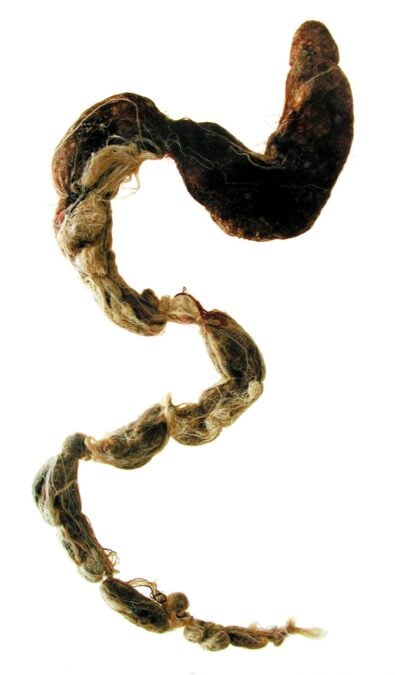
The girl had no history of mental illness, and no visible baldness or hair loss that would usually be a giveaway for trichotillomania.
“Our patient did not meet the criteria for any mood disorders and was meeting
normal developmental milestones and remained completely asymptomatic until complete blockage of her GI tract,” the doctors write.
Nonetheless, the trichobezoar lodged in her gut was large enough to span her stomach and duodenum (the first section of the small intestine), obstructing her GI tract.
Since the doctors were unable to reach it with a scope, they conducted surgery to remove the sizeable clump of hair.
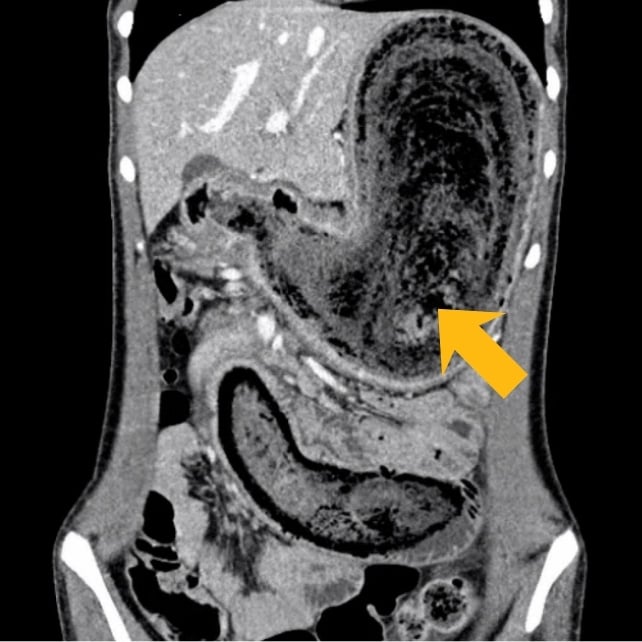
After her surgery, the patient told the doctors she had started pulling her hair out and consuming it about two years prior. But she only did it about once a week, pulling only three hairs at a time, which may explain why it had gone unnoticed.
Other than the hair pulling and eating, however, she denied any recent stressors, neglect, trauma, or abuse, and had no signs of other psychiatric conditions. She did, however, suffer from migraine attacks with cyclic vomiting that began at a young age and led to her being homeschooled.
The doctors hope this case report can help raise awareness of the syndrome, and the fact that it may not always be immediately obvious.

Social stigma and shame about trichotillomania and trichophagia mean patients often go to great lengths to conceal their compulsive behaviors.
“Given that trichobezoars have the potential to be very dangerous, and sometimes even deadly, it is important to not overlook this diagnosis in an adolescent female with nausea, vomiting, or abdominal pain even in the absence of noticeable hair loss or a coexisting psychiatric disorder,” the report’s authors warn.
Related: Trichotillomania – New Study Explains Why People Feel Compelled to Pull Out Their Own Hair
After her surgery, the girl was prescribed sertraline (a medication for anxiety, depression, and OCD) and referred to cognitive behavioral therapy before being discharged from the hospital.
The research was published in the Journal of Medical Case Reports.
This article was fact-checked by Peter Dockrill and edited by Peter Dockrill. While we pride ourselves on our process, we are only human. If you spot a mistake, please let us know.
What did you think of this news? Leave a comment below and/or share it on your social media. This way, we can inform more people about the hottest things in technology, science, innovation, and gaming!
This news was originally published in:
Original source
