
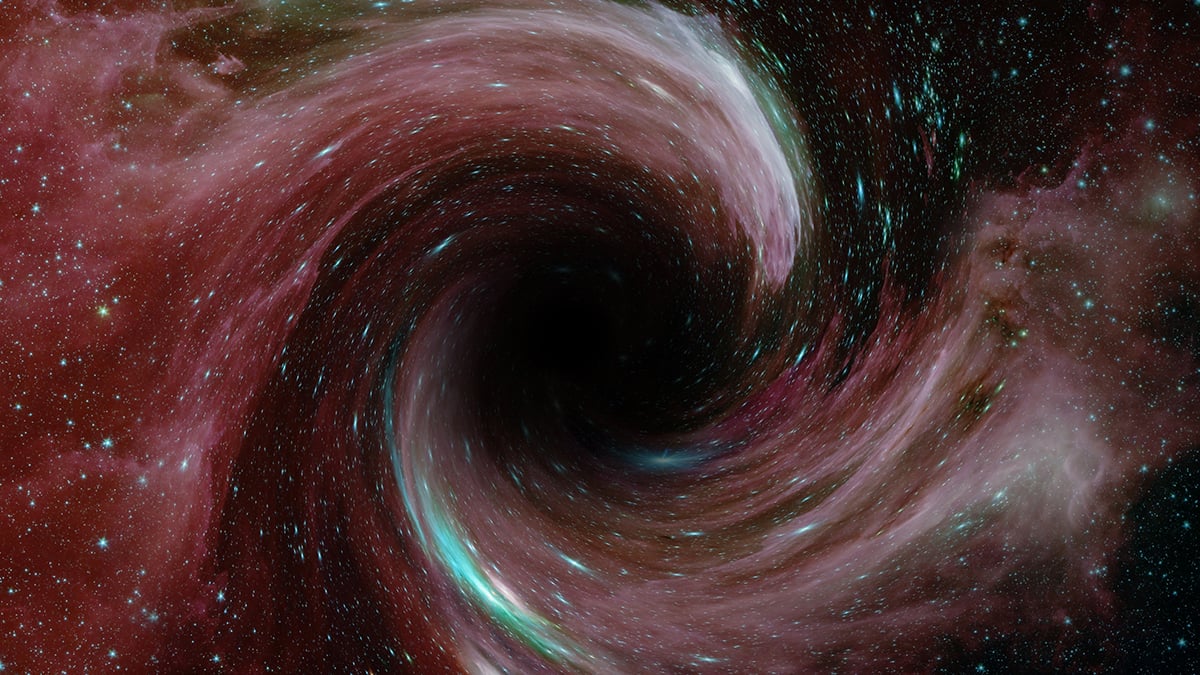
Dark Matter May Have a Secret, Extra Force That Doesn’t Work The Way We Expect
The standard cosmological model does an excellent job of explaining the Universe, but there are a few places where the numbers don’t add up. That’s led to several theories about dark forces working behind the scenes.
One of those theories attempts to explain the ‘clumpiness’ of dark matter.
Although its nature remains unknown, dark matter provides much of the gravitational scaffolding that helps galaxies and the larger cosmic web take shape.
But some observations hint that cosmic structure may be more strongly ‘clumped’ at later times than the standard cosmological model predicts.
Recent research has suggested there might be an extra force at play, in addition to gravity, that’s drawing these clumps together: a hidden interaction acting only within the dark sector.
A team of experts from Canada and the US has now published a study in the Journal of Cosmology and Astroparticle Physics that rigorously interrogates one of the simplest versions of this idea.
Their conclusion is that adding another attractive force does not necessarily make the observable Universe clumpier.
“The first thing you would expect is that giving dark matter an additional attractive force should make structures grow faster,” says theoretical physicist Zachary Weiner, from the Perimeter Institute for Theoretical Physics in Canada.
“But another effect comes into play at the same time.”
In other words, as dark matter is thought to act as the main scaffolding for the Universe, making these particles more attractive to each other should speed up that construction process (the clumping) overall.
Based on the researchers’ modeling, cross-referenced with observational data on the cosmic microwave background and large-scale structure, the proposed dark force would indeed increase dark matter clumping.
However, that impact would be basically canceled by something else.
In addition to increasing the attraction between dark matter particles, the force would cause their effective mass to decrease as the Universe evolves, diluting background dark matter density more rapidly, the researchers found.
So if these dark matter particles become lighter over time, the expected effect is actually suppressed growth of cosmic structure.
“The Universe is often more subtle than our intuition,” says Weiner. “That’s exactly why we have to keep testing these ideas.”
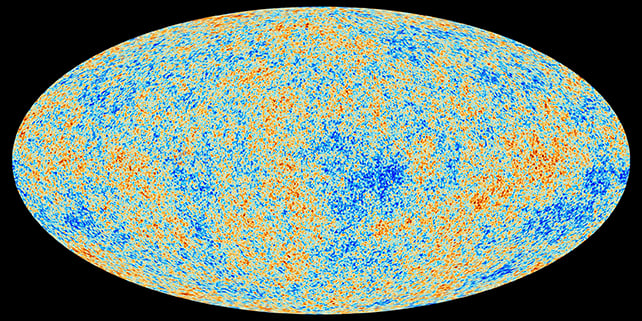
For the extra dark force to make sense in relation to the readings we already have of the cosmic microwave background (the oldest light we can observe), and the estimated rate of the expansion of the Universe, there would need to be more dark energy.
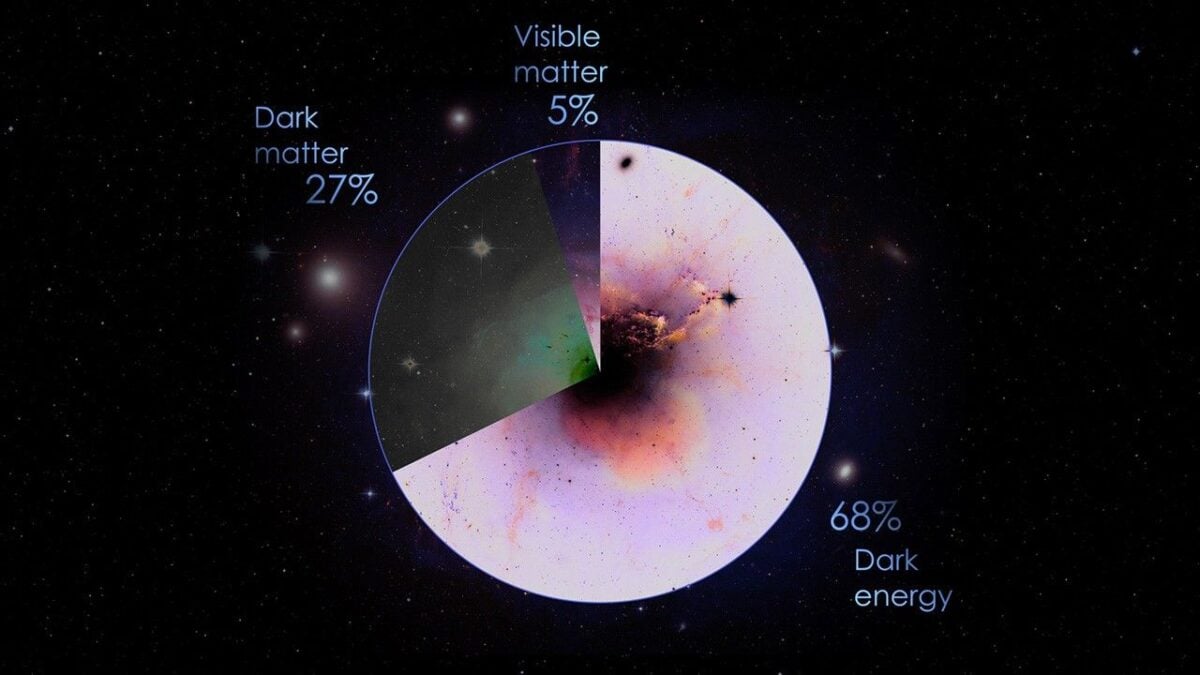
Dark energy is the name given to the unknown component associated with the Universe’s accelerating expansion; dark matter, as mentioned, is considered to be the scaffolding or glue that helps shape galaxies and cosmic structure.
How these two elements are balanced and interact is a fundamental question for astrophysicists.
The researchers aren’t ruling out the existence of a dark force, and their data actually hint at the existence of a very weak one, but these models are going to need a significant rethink to fit everything together.

“What we really know about dark matter has so far been learned only through its gravitational effects,” says Weiner.
“That leaves open the possibility that dark matter might have additional interactions that are hidden from ordinary matter.”
As the researchers admit, the models they’ve used here are limited to linear scales, rather than the more complex interactions we actually see in space, so improving the detail of these simulations is a potential avenue to explore in future studies.
Combined, dark matter and dark energy are thought to make up as much as 95 percent of the total mass-energy in the Universe, and so any new discovery in relation to these elusive cosmic ingredients has potentially profound implications
What’s encouraging is that the latest telescopes and number-crunching techniques are regularly providing more data – and more accurate data – which means these hypotheses can be refined over time.
Related: Mysterious ‘Dark Big Bang’ Could Explain The Origins of Dark Matter
“We will investigate these ideas and their possible implications for cosmological observables more broadly in future work,” write the researchers in their published paper.
The research has been published in the Journal of Cosmology and Astroparticle Physics.
This article was fact-checked by Rebecca Dyer and edited by Rebecca Dyer. While we pride ourselves on our process, we are only human. If you spot a mistake, please let us know.
What did you think of this news? Leave a comment below and/or share it on your social media. This way, we can inform more people about the hottest things in technology, science, innovation, and gaming!
This news was originally published in:
Original source
