
Animals Are Thriving in Chornobyl’s Human-Free Zone, Study Finds
The explosion of a reactor in the Chernobyl Nuclear Power Plant 40 years ago in April 1986 was one of the biggest human-made accidental disasters in history.
The subsequent nuclear meltdown and fire that destroyed the building scattered dangerous radioactive contaminants for miles. The nearby towns of Chornobyl and Pripyat were evacuated, and Soviet authorities declared an exclusion zone for a radius of 30 kilometers (19 miles) around the site.
Today, the Chernobyl Exclusion Zone (CEZ) covers an area of around 2,600 square kilometers (1,000 square miles). It’s one of the most radioactive regions on Earth, where humans rarely dare venture.
But here, something curious happens.
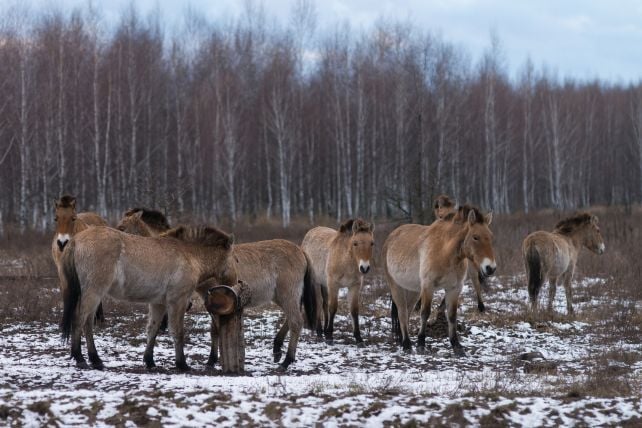
Animals can’t read warning signs – and, in the almost total absence of human activity, other lifeforms have taken advantage of the relative peace.
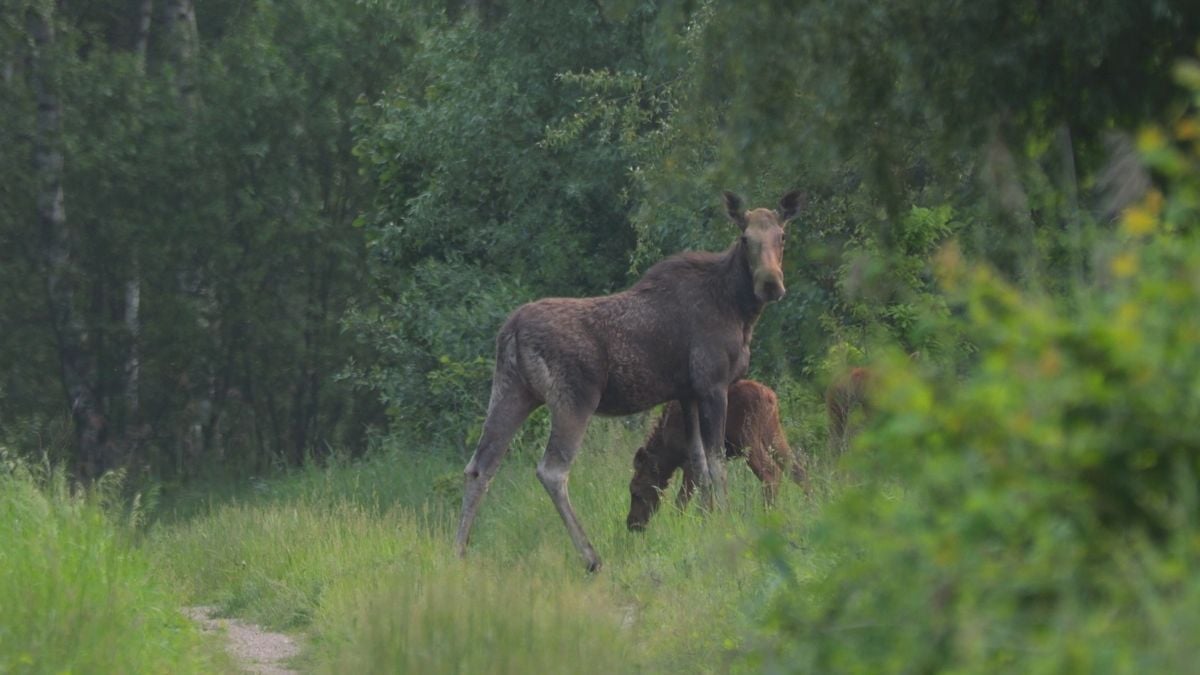
In a new paper, a team of researchers has documented a surprising number of large animals thriving, including Przewalski’s horses, moose, Eurasian lynxes, and deer. Moreover, the animals were detected most often in the largest and most connected protected areas.
The unintended result of a catastrophic human disaster appears to be a radioactive Garden of Eden.
Actually, this refuge is not entirely accidental. Scientists have long known that the exclusion zones around the ruined power plant are buzzing with animal activity.
In 2016, Ukraine established the Chornobyl Radiation and Ecological Biosphere Reserve as an official sanctuary for the animals therein.
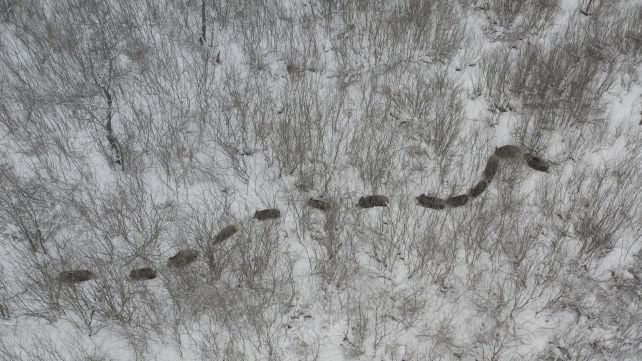
A team of scientists, led by ecologist Svitlana Kudrenko of the Albert Ludwig University of Freiburg in Germany, has spent several years working to document the wildlife in and around these areas.
In 2020 and 2021, they used camera traps to study the comings and goings of animals in the Chornobyl reserve, four other nearby nature reserves – the Drevlianskyi, Polissia, Rivne, and Cheremskyi Nature Reserves – two nature parks, as well as surrounding regions that are not officially protected areas.
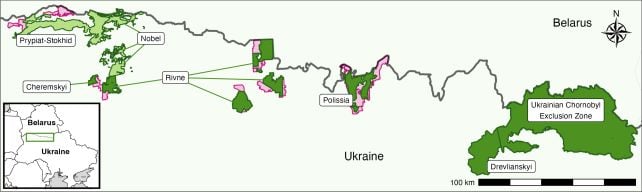
In all, they covered an area of 60,000 square kilometers in northern Ukraine, meticulously counting the animals that appeared in the camera traps.
Most of these parks and reserves are isolated. Only the Chornobyl and Drevlianskyi reserves are connected – and this, the researchers found, made a dramatic difference.
They documented 13 wild species across the study area: Red deer (Cervus elaphus), roe deer (Capreolus capreolus), moose (Alces alces), Przewalski’s horse (Equus ferus przewalskii), wild boar (Sus scrofa), European hare (Lepus europaeus), red fox (Vulpes vulpes), raccoon dog (Nyctereutes procyonoides), European badger (Meles meles), martens, gray wolf (Canis lupus), Eurasian lynx (Lynx lynx), and brown bear (Ursus arctos).
Domestic dogs and livestock were also spotted, as well as some people.
The vast majority of sightings occurred in the Chornobyl reserve – 19,832 of the total 31,200 sightings.
The other reserves also had relatively high numbers compared to the non-protected areas, but the difference between the connected CEZ-Drevlianskyi areas and the rest was stark.
Now, 19,832 images do not mean 19,832 individual animals, since the same animal can appear in multiple images, especially if the cameras are placed in or close to their preferred range.
But, using the camera trap data, the researchers were able to model animal occupancy – concluding that animal diversity, occupancy, and detection are highest in the CEZ and Drevlianskyi areas.
There could be several reasons for this, but the fact that the strongest connection was with the largest, most continuous area with the strongest enforcement against human intrusion probably means something, according to the researchers.

At this scale, the connected reserves create a mosaic of habitats large enough to support bigger animals over the long term – especially animals such as moose, which the researchers found were particularly sensitive to human activity, becoming scarcer after researchers entered the area.
Related: Chornobyl Fungus Appears to Have Evolved an Incredible Ability
The researchers did not attempt to investigate the effects of radiation on these populations. Rather, they wanted to assess what happens when humans are no longer around.
Their results suggest that reduced human activity benefits wildlife, and protected zones are worth establishing and maintaining.
Access to the region has become more difficult since Russia’s 2022 invasion of Ukraine, which means that further research will have to wait.
For now, we can all enjoy the uneasy knowledge that, for some large animals, life in one of the most radioactive places on the planet is preferable to hanging out in our presence.
The research has been published in the Proceedings of the Royal Society B: Biological Sciences.
Editor’s note: This article uses the spelling “Chernobyl” to reflect the historical context of the 1986 disaster, when Ukraine was part of the Soviet Union and Russian transliterations were widely used. The Ukrainian spelling is “Chornobyl”.
What did you think of this news? Leave a comment below and/or share it on your social media. This way, we can inform more people about the hottest things in technology, science, innovation, and gaming!
This news was originally published in:
Original source
