
Astronomers Spotted a ‘Bear’ on Mars
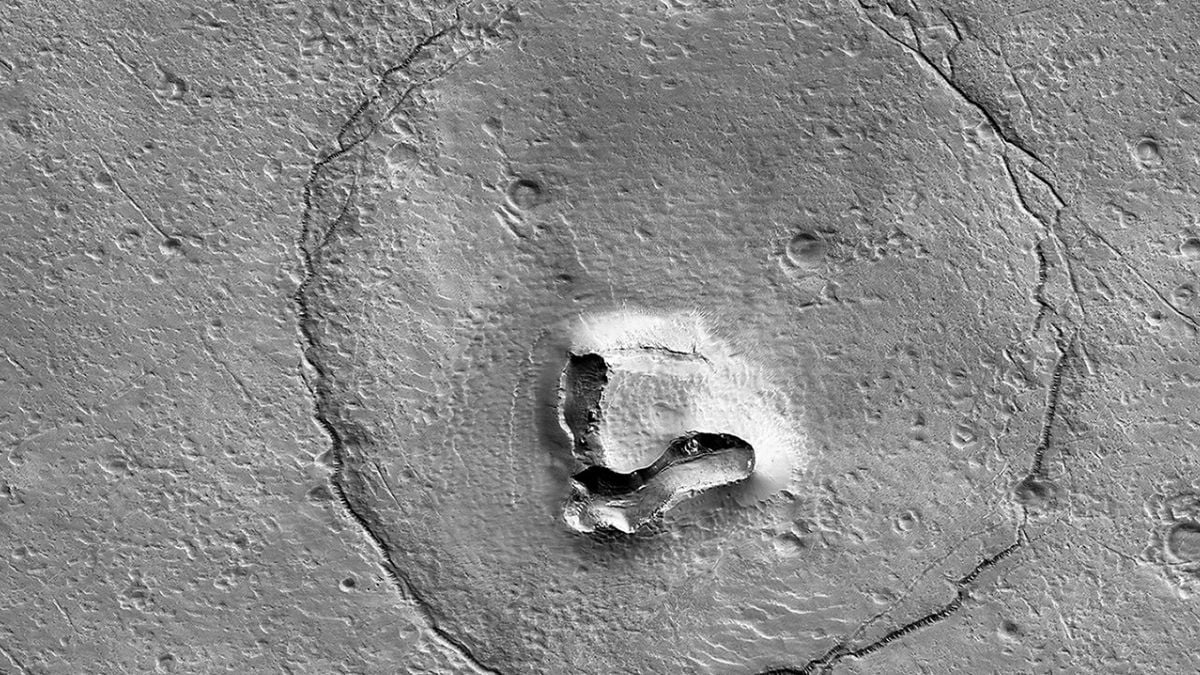
On 12 December 2022, an orbiter traveling 251 kilometers (156 miles) above the southern highlands of Mars photographed a hill.
It should have been an unremarkable shot – one of tens of thousands NASA’s Mars Reconnaissance Orbiter HiRISE camera has captured of the Martian surface since 2006.
Instead, something seemed to be looking back.
Two dark, round pits sat like eyes.
Between them, a pale ridge tapered down like an adorable snout. The whole thing was ringed by a near-perfect circular crack, giving it the outline of a head.
If you look at it together, it’s hard to deny that it looks – almost comically – like an adorable little bear.
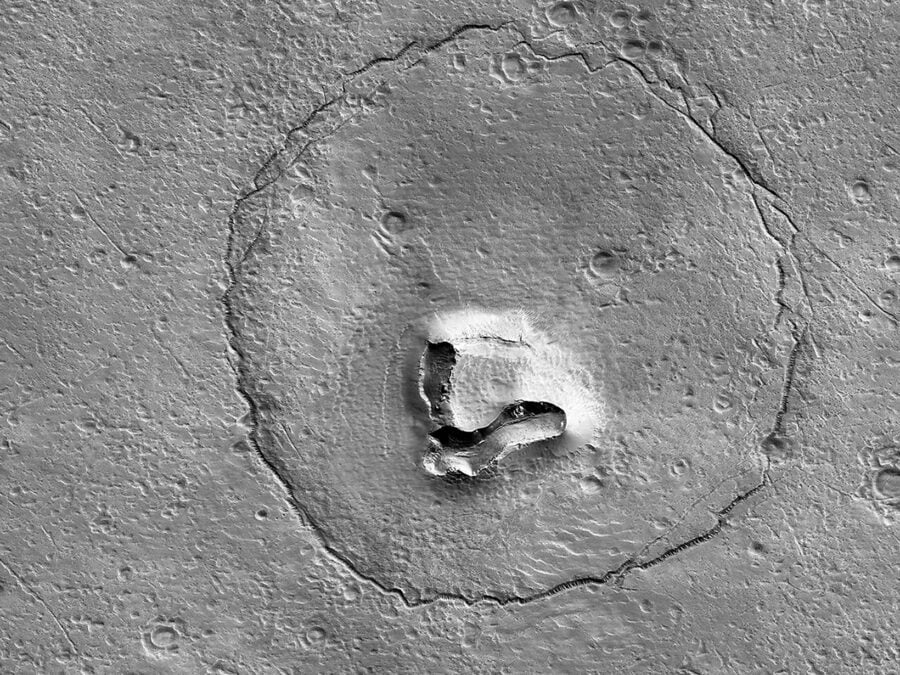
But, alas, there’s a more mundane explanation.
“There’s a hill with a V-shaped collapse structure (the nose), two craters (the eyes), and a circular fracture pattern (the head),” Alfred McEwen, the University of Arizona planetary scientist who leads the HiRISE camera team, explained in 2023.
Even the individual features have ordinary explanations. McEwen suspects the circular fracture could be what’s left after loose material settled on top of a buried, long-since-filled impact crater.
The ‘nose’ might be a volcanic or mud vent, with the surrounding V-shape marking where lava or mud once flowed out of it.
So why do we see a sweet little bear looking back?
This is what’s known as pareidolia – the same wiring that turns a car’s headlights into a startled face, or a water stain into a religious icon. Human brains have evolved to spot faces quickly, in bad light, from a distance.
This might be because, for most of our history, recognizing ‘that’s a face’ a half-second sooner than the next primate could have been the difference between spotting a threat and missing it.

The tradeoff is a pattern-recognition system so trigger-happy it finds faces everywhere – including in a grainy orbital photo of Martian rock.
It’s not the first time we’ve seen something look back at us from Mars. In 1976, NASA’s Viking 1 orbiter photographed a mesa in Mars’ Cydonia region that, at low resolution looked eerily like a carved human face staring up at space.
Higher-resolution images from later orbiters, HiRISE included, quietly ended the argument: it was a mesa. A large, unremarkable rock formation that happened to catch the light a certain way.
A completely different Martian smiley turned up much more recently, and for reasons that have nothing to do with its expression.
In August 2024, scientists working with the European Space Agency’s Trace Gas Orbiter were cataloging chloride salt deposits in a region called Terra Sirenum when they came across one shaped like a smiley face – a ring of dried salt with two small craters sitting where eyes would go.
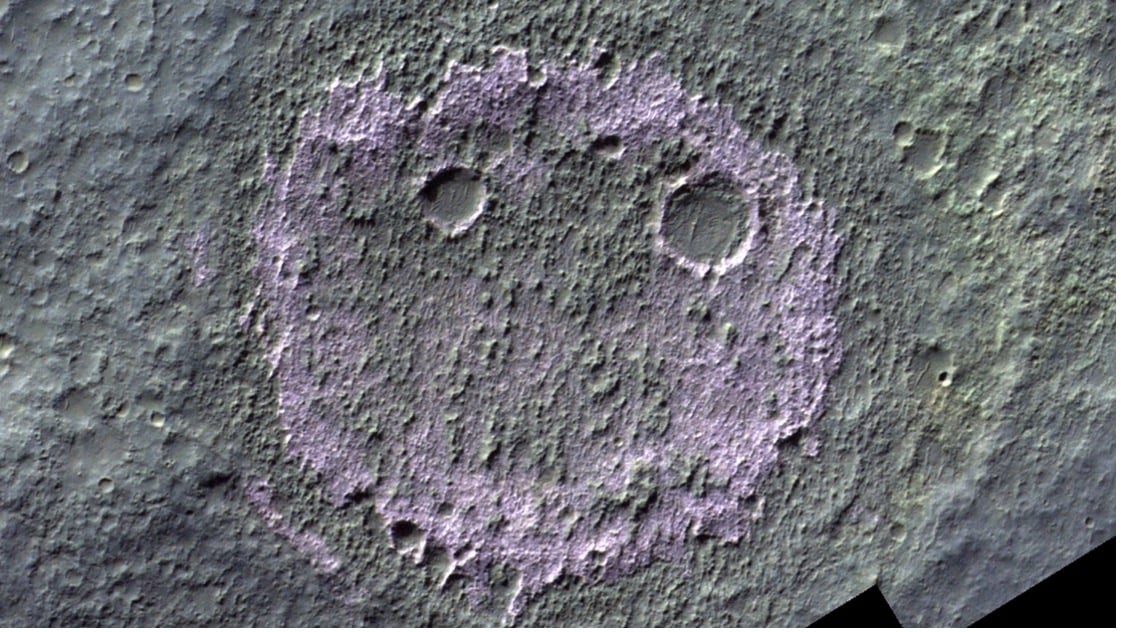
The salt itself is the interesting part. It’s what’s left behind after shallow ponds or lakes evaporated, sometime during Mars’ wetter past, letting dissolved minerals concentrate and crystallize.
Salty water like that can stay liquid at temperatures – down to around -40 °C – that would freeze plain water solid, which is exactly the kind of extreme, long-lasting brine where life could plausibly have hung on the longest as Mars dried out.
Related: Lifeless Objects Stare at You Everywhere. A New Study Explains Why They Won’t Quit
That makes deposits like this one genuine targets for future missions hunting for biosignatures, grin or no grin.
More recently, we’ve also seen a jellyfish on Mars (that one turned out to be a cosmic ray striking the camera’s sensor), weird pits, a human bone, and mushrooms.
Most of those have ordinary explanations by now – though as of this week, scientists still aren’t sure what carved the pits.
But we’re continuously discovering cool things about the red planet itself. Even if it doesn’t have any bears on it.
This article was fact-checked by Peter Dockrill and edited by Peter Dockrill. While we pride ourselves on our process, we are only human. If you spot a mistake, please let us know.
What did you think of this news? Leave a comment below and/or share it on your social media. This way, we can inform more people about the hottest things in technology, science, innovation, and gaming!
This news was originally published in:
Original source

