
This Infamous Radioactive ‘Tomb’ Is Leaking, And Experts Are Worried
A gaping hole was left on a small island in the Pacific Ocean when the United States military released an 18-kiloton nuclear blast in 1958, known as the ‘Cactus‘ test.
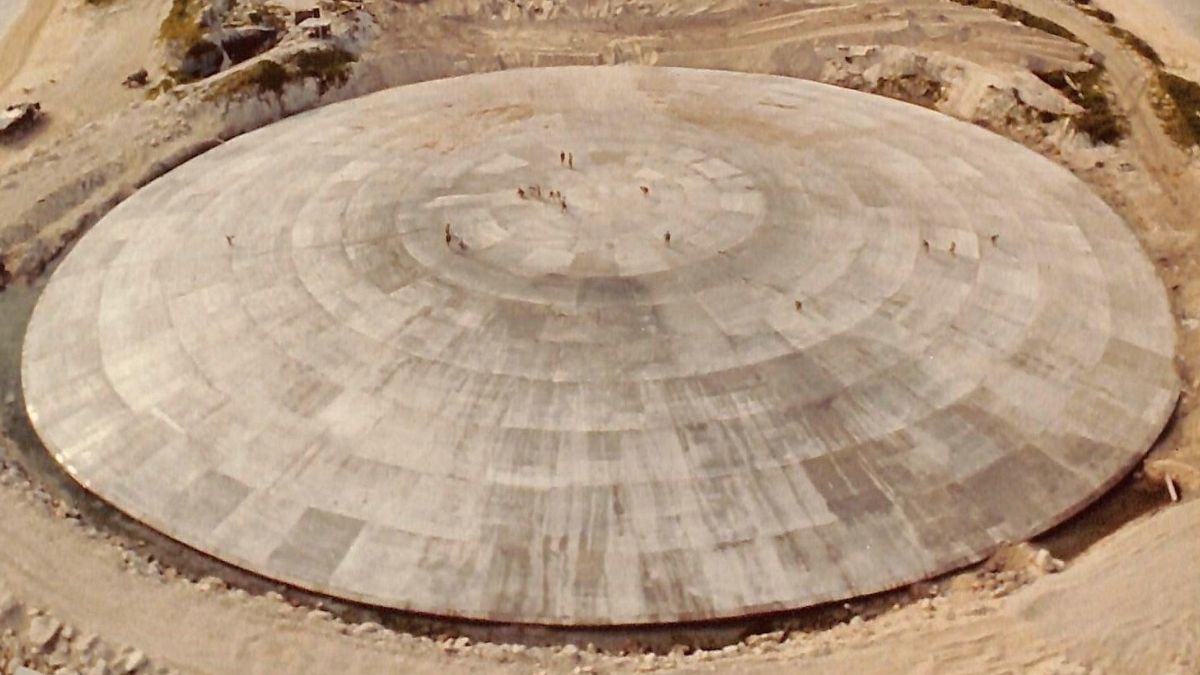
After the blast took place on the Marshall Island’s Runit Island, the military filled it in with contaminated soil and debris, creating a ‘tomb’ of nuclear waste known now as the Runit Dome.
Almost 50 years after the dome’s construction, experts are concerned that cracks in the concrete-capped radioactive landfill indicate just how vulnerable the site is to rising seas encroaching upon the narrow island’s shores.
The 115-meter (377 feet)-wide dome, built between 1977 and 1980 as part of military cleanup efforts, rests above more than 120,000 tons of material that were contaminated by US nuclear testing across Enewetak Atoll, including lethal quantities of plutonium.
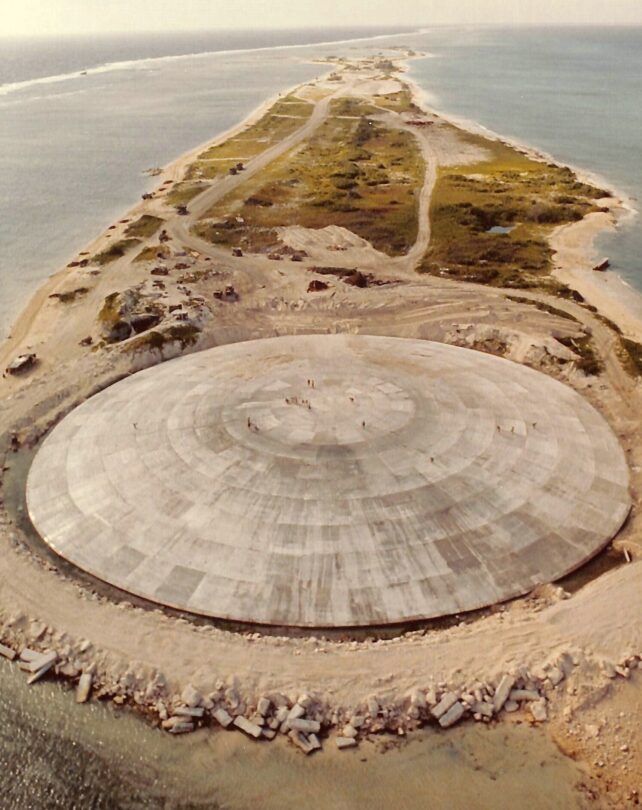
The dome was intended as a temporary solution to contain material left behind by the nuclear tests, some of which exceeded the magnitude of Hiroshima and Nagasaki 1,000 times over.
But since its construction, groundwater has penetrated the otherwise-unlined crater, beneath which there lies a bed of porous coral sediment. So far, this is the main source of leaks, but there are concerns that layers of the dome intended to sit above sea level are not going to stay above water much longer.
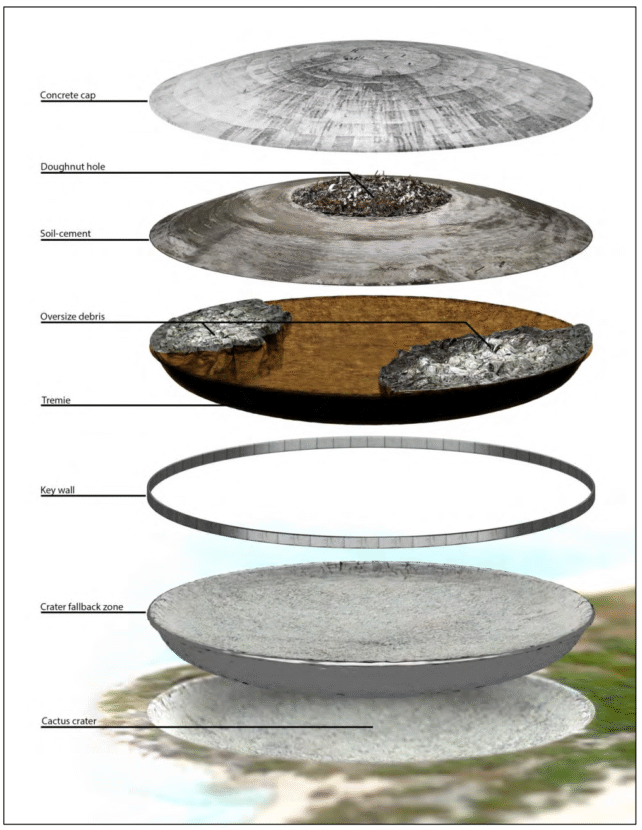
containment structure. (Terry Hamilton/Lawrence Livermore National Laboratory/US Department of Energy)
In 2020, following a major report by the Los Angeles Times, Woods Hole Oceanographic Institute marine radioactivity expert Ken Buesseler pointed out that radioactive leaks from the Runit Dome are, so far, “relatively small,” in an interview for the institute’s journal.
“As long as the plutonium stays put under the dome, it won’t be a large new source of radiation to the Pacific Ocean,” Buesseler told journalist Evan Lubofsky at the Los Angeles Times.
“But a lot depends on future sea-level rise and how things like storms and seasonal high tides affect the flow of water in and out of the dome. It’s a small source right now, but we need to monitor it more regularly to understand what’s happening, and get the data directly to the affected communities in the region.”

Columbia University chemist Ivana Nikolic-Hughes has been involved in ongoing research into the persistent contamination of the Marshall Islands following nuclear testing, and recently told journalist Kyle Evans at the Australian Broadcasting Corporation that she saw the dome’s cracks first-hand while taking soil samples on the island back in 2018.
In her research, Nikolic-Hughes has found elevated radiation levels and significant quantities of five radionuclides in soil samples from the island, outside the dome.
This could be evidence of the nuclear tomb leaking – though it may also be the result of the haphazard nature of the cleanup efforts, which also resulted in much waste being dumped into the lagoon.
Either way, the presence of plutonium-239, a component of nuclear weapons that remains dangerous for more than 24,000 years, warrants grave concerns about its vulnerability to rising sea levels and climate change.
“Given that sea levels are rising and there’s indications storms are intensifying, we worry the integrity of the dome could be in jeopardy,” Nikolic-Hughes told Evans.
“Runit is about 20 miles from where people live and they use the lagoon, so the implications are potentially devastating.”
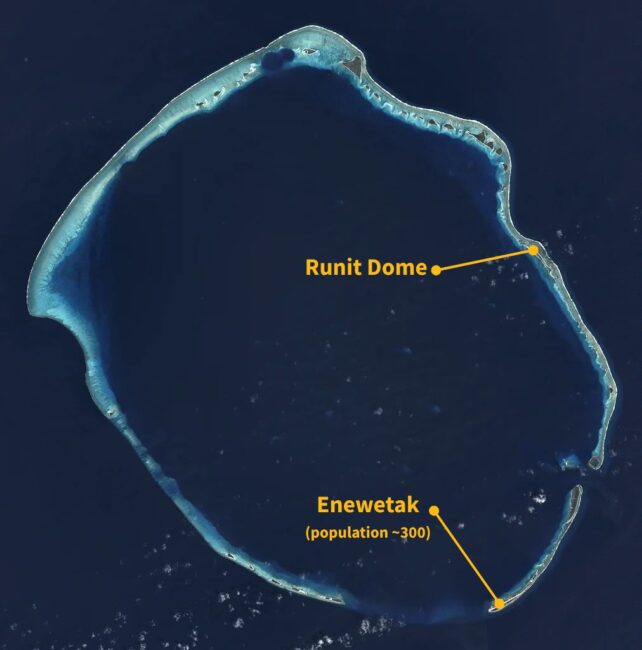
In 2024, the US Department of Energy’s Pacific Northwest National Laboratory conducted an investigation into the potential impacts of climate change on the Runit Dome site, finding that storm surges and gradual sea level rise would indeed be the biggest factor in spreading radionuclides through the atoll.
Most of Runit Island sits just 2 meters (6.5 feet) above sea level.
Viewed from above, it is easy to imagine what an impact just 1 meter of extra water could do to the atoll and Runit Island’s crumbling nuclear tomb. That is the amount of sea level rise climate scientists predict for the Marshall Islands by 2100.
Related: Parts of The Marshall Islands Are Now More Radioactive Than Chernobyl, Study Finds
Nikolic-Hughes and her fellow researcher Hart Rapaport have previously urged the United States to take responsibility for proper cleanup of nuclear waste on the islands, as one part of ensuring a safe future for Marshallese residents.
As United Nations special rapporteur Paula Gaviria Betancur said back in 2024: “Legacies of nuclear testing and military land requisitions by a foreign power have displaced hundreds of Marshallese for generations, while the adverse effects of climate change threaten to displace thousands more.”
What did you think of this news? Leave a comment below and/or share it on your social media. This way, we can inform more people about the hottest things in technology, science, innovation, and gaming!
This news was originally published in:
Original source

