
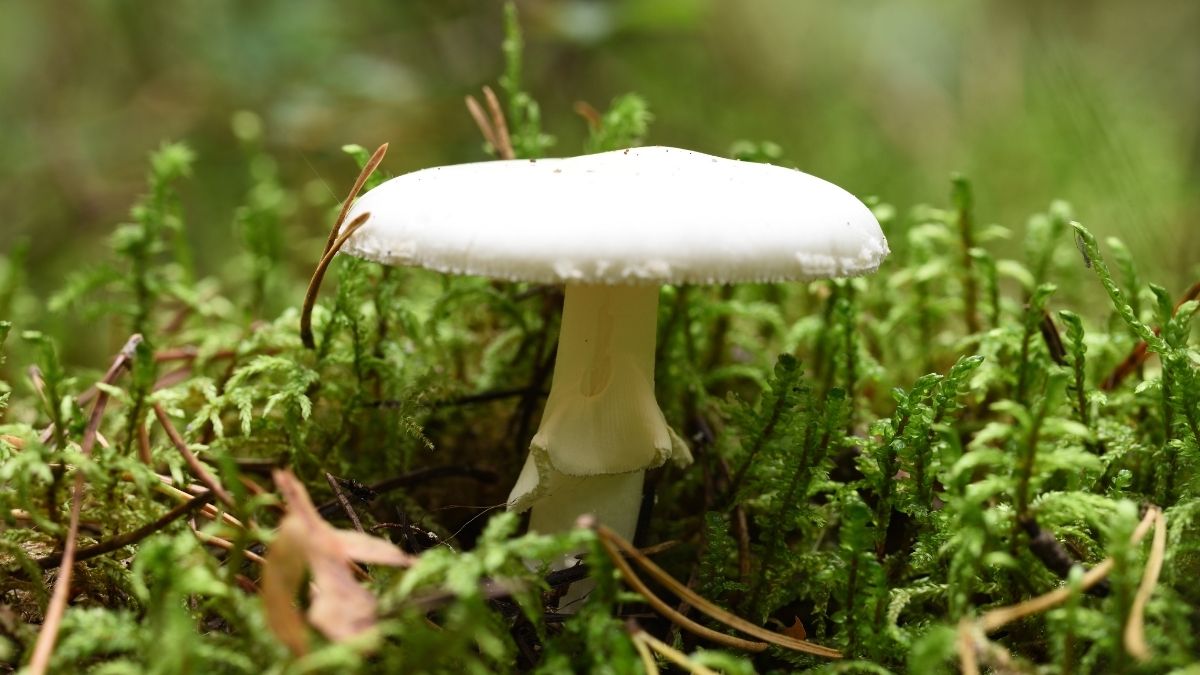
California’s Death Cap Mushrooms Are Making New Compounds, Scientists Discover
The poisonous death cap mushroom gives the entire fungi kingdom a bad rap, and it turns out they’re not only spreading across continents, they’re rapidly evolving, too.
Eating just one of these ghostly white mushrooms, Amanita phalloides, can kill an adult – the toxins they contain are responsible for around 90 percent of fatal mushroom poisonings each year.
But they weren’t always so widespread. While they’re actually native to Europe, death caps are now found in parts of the Americas, Africa, and Australia.

A new study from mycologist Anne Pringle’s lab at the University of Wisconsin-Madison (UW-Madison) reveals that invasive populations of the death cap in California have begun to produce different chemicals than they do in their native range.
This adds to evidence that A. phalloides is a genetically versatile killer, rapidly adapting to its new habitat.
“I have no doubt these invasive mushrooms are impacting native ecosystems, but we are still working towards understanding the actual consequences and bigger picture,” says Cecelia Stokes, mycologist at UW-Madison.
Although Stokes was not an author on the current paper, she is a member of Pringle’s lab and has been studying chemical changes associated with the death cap’s range expansion across the western US.
“We do know death cap mushrooms are popping up in dense patches in forests from year to year. You can find more than 40 mushrooms under one tree, and this is abnormal, especially in comparison to the native mushroom species,” Stokes says.

An earlier paper from Pringle and colleagues revealed the death cap mushroom’s genes – particularly a kind known as MSDIN genes – had diversified since the fungus arrived in the US in the 1930s.
These genes are the ‘secret recipe’ for the mushroom’s poison. First, multiple genes have to be translated into ingredients. Then, those ingredients have to be chopped up and tweaked in specific ways, by specific enzymes, to produce compounds known as secondary metabolites, which are either poisonous or may help the fungus spread. It’s not a packet mix, it’s baking from scratch.
Related: The World’s Deadliest Mushroom Appears to Have an Antidote
Until now, we thought all the secondary metabolites that mushrooms produce in this way had a string of amino acids called a leader sequence. In the new paper, Pringle and team have found that Californian death caps can produce secondary metabolites without that leader sequence.
It’s unclear what the implications of this actually are, but the team did find that the leaderless peptides are being expressed at “several orders of magnitude more” than any others in their arsenal – and at much higher levels than their European counterparts.
The researchers do suspect, however, that these new peptides could play an important role in the invasion biology of the world’s deadliest mushroom, potentially influencing their impact on local ecosystems.
The research was published in Proceedings of the National Academy of Sciences.
What did you think of this news? Leave a comment below and/or share it on your social media. This way, we can inform more people about the hottest things in technology, science, innovation, and gaming!
This news was originally published in:
Original source
