
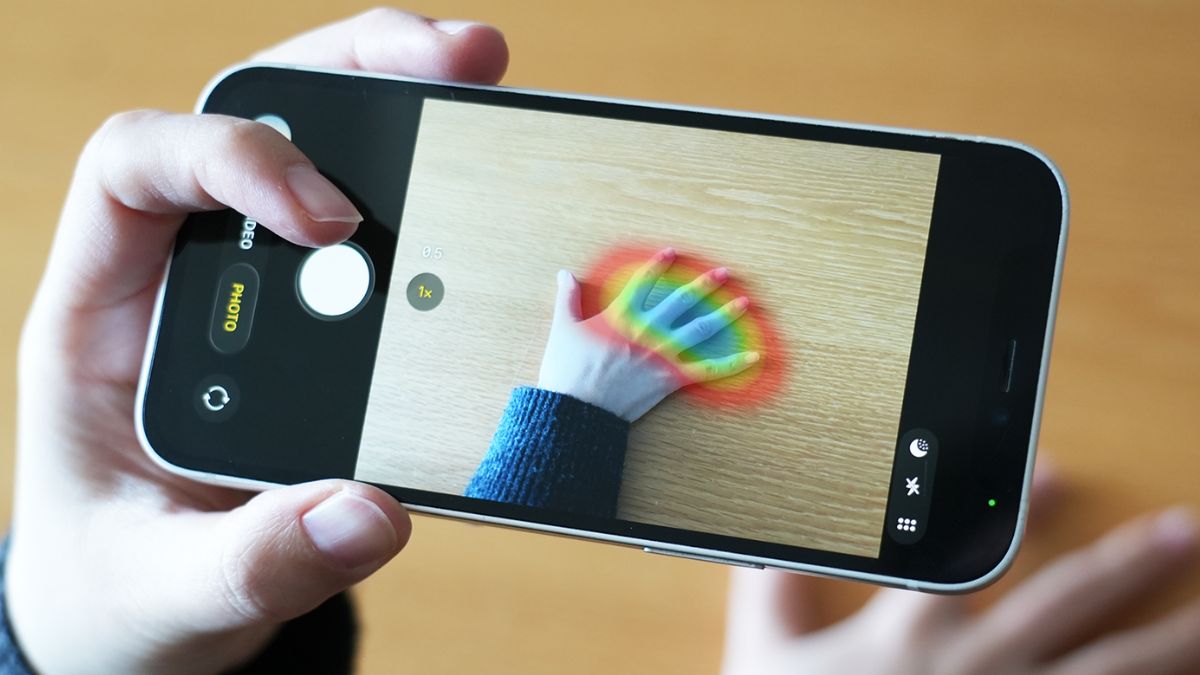
A Simple Photo of Your Hand Could Detect a Rare Health Disorder
Palm reading may not foresee your future, but if you flip your hand around, it could reveal crucial information about how long you may live.
According to new research, a simple photo of the back of your hand may help detect a rare and deadly hormone disorder that is otherwise difficult to diagnose.
If the condition is left untreated, it can cause life-threatening complications. On average, it reduces life expectancy by about a decade.
Acromegaly occurs when the body produces too much growth hormone, and it tends to set in around middle age. Enlarged hands and feet are among the first signs that something has gone awry.
“Because the condition progresses so slowly, and because it is a rare disease, it is not uncommon to take up to a decade for it to be diagnosed,” explains Kobe University endocrinologist Hidenori Fukuoka.
“With the progress of AI tools, there have been attempts to use photographs for early detection, but they have not been adopted in clinical practice.”
Plus, using photos of the face comes with privacy concerns. Hands are more anonymous, especially when the palm and its unique lines are hidden from view.
Hidenori and colleagues, therefore, enlisted 725 participants, roughly half of whom had acromegaly, from 15 medical facilities in Japan. More than 11,000 images of their hands were then used to train and validate an AI model. These photos obscured the palm by focusing on the back of the hand and a clenched fist.
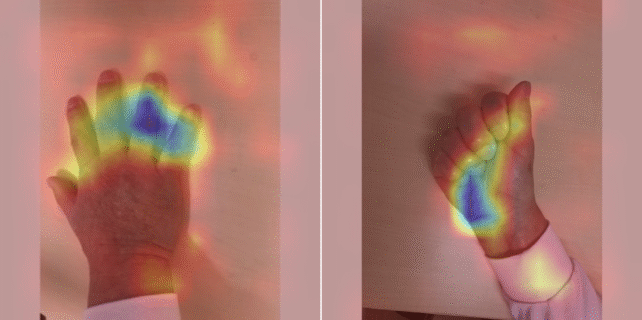
Ultimately, the model identified patients with acromegaly with a positive predictive value of 0.88 and a negative predictive value of 0.93.
That means that if the test result was positive, there was an 88 percent chance that the person truly had acromegaly.
Meanwhile, if the test result was negative, there was a 93 percent chance the patient did not have acromegaly.
The AI model even outperformed real human specialists in endocrinology when they were given the same photos.
“Frankly, I was surprised that the diagnostic accuracy reached such a high level using only photographs of the back of the hand and the clenched fist,” says first author Yuka Ohmachi, a Kobe University graduate student.
“What struck me as particularly significant was achieving this level of performance without facial features, which makes this approach a great deal more practical for disease screening.”
For every 100,000 individuals in a population, acromegaly impacts roughly 8 to 24 individuals.
Common symptoms include swelling of the extremities, headaches, and facial changes, but because these changes develop gradually, early diagnosis remains challenging. Roughly a quarter of patients currently deal with diagnostic delays exceeding 10 years.
“This study supports our hypothesis that acromegaly can be diagnosed using hand images alone with an accuracy comparable to that reported for facial image-based AI diagnosis,” write Fukuoka and colleagues.

Even still, this new machine learning tool does not mean that human specialists are no longer needed. Acromegaly is not diagnosed solely through visual means. Endocrinologists also consider changes in voice, facial expressions, and biochemical markers, as well as a person’s overall medical history.
Such a comprehensive overview isn’t going anywhere, but a new AI tool may complement the process and speed it up.
“The ability of such a model to assist healthcare providers who may not have specialized training represents a significant step forward in diagnostic accuracy and in promoting equitable healthcare delivery,” the study authors conclude.
Related: Medical Chatbots Are Coming. Here’s What You Need to Know Before Using One.
The research team now wants to see if their model works on larger, more diverse populations. They also want to explore whether they can use a similar model for other conditions that can show up on the hands, like rheumatoid arthritis, anemia, or finger clubbing.
“We believe that, by further developing this technology, it could lead to creating a medical infrastructure during comprehensive health check-ups to connect suspected cases of hand-related disorders to specialists,” says Fukuoka.
The study was published in The Journal of Clinical Endocrinology and Metabolism.
What did you think of this news? Leave a comment below and/or share it on your social media. This way, we can inform more people about the hottest things in technology, science, innovation, and gaming!
This news was originally published in:
Original source
