
A Pickle Plugged Into an Outlet Glows Like a Tiny Star. Now We Know Why.
Modern science reveals not only answers but also many intellectually provocative questions.
These include essential riddles regarding the origin of life, the cosmological fate of the Universe, and why pickles glow when you plug them into an outlet.
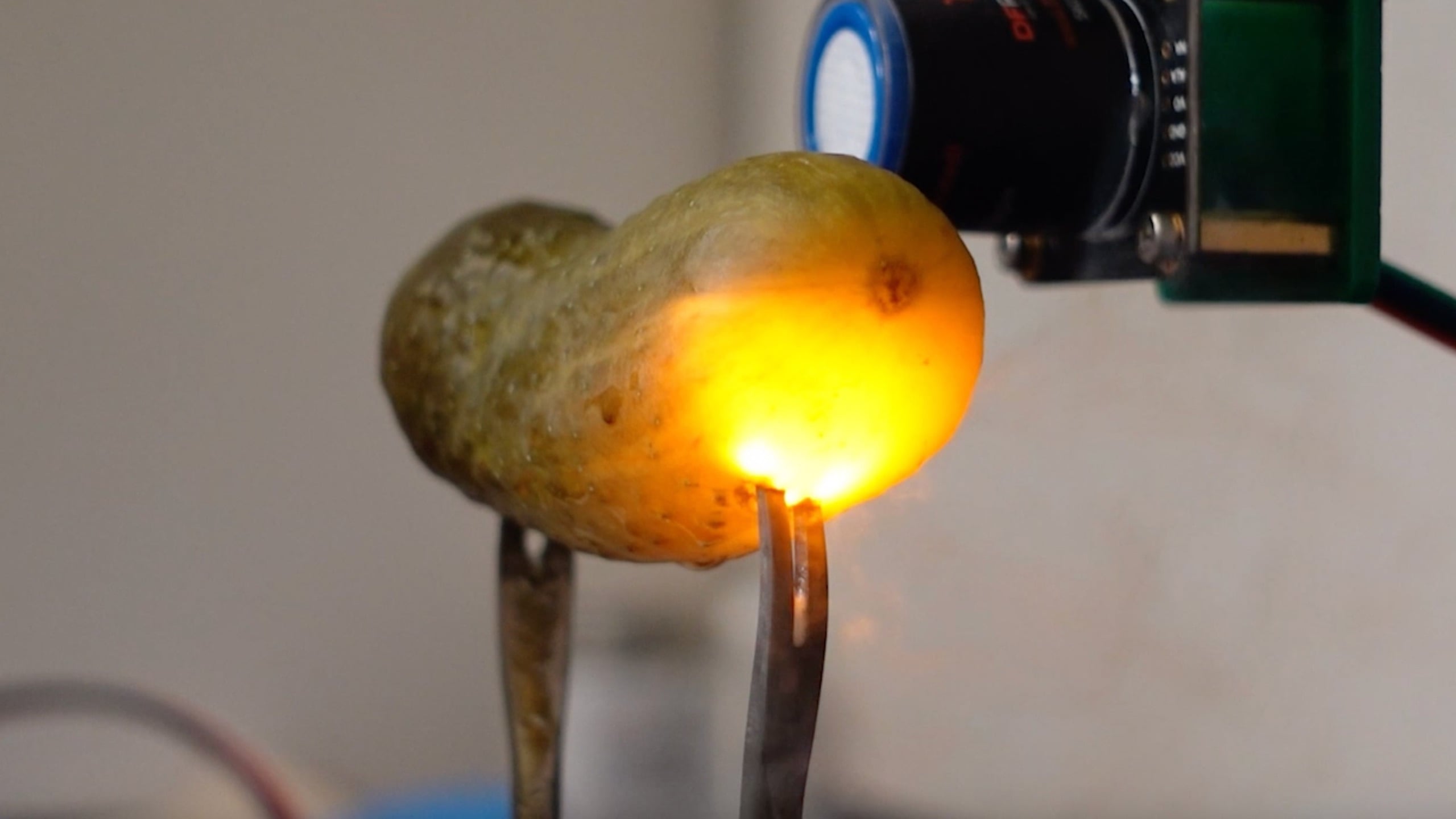
It’s a popular and shockingly (so don’t try it at home) intriguing electrical experiment: when one sticks two forks into a pickle and plugs this elec-pickle system into a power source, one end of the pickle glows.
Thanks to some recent elucidation, we may now know why: exploding hydrogen.
The glowing pickle trick builds on a rich history of public science demonstrations of varying utility, stretching at least 400,000 years into the past, to the earliest known ancient human relatives who created fire-starting sparks with flint and pyrite.
Fast-forwarding to around 2,600 years ago, it’s said that Thales of Miletus marveled at observing that rubbing fur and amber imbues them with an attraction toward feathers and bits of straw via static electricity.
Some such acts – a sign of their times – have been realized in paint, as by Joseph Wright of Derby, who in 1768 unveiled a cruel scientific exhibition, An Experiment on a Bird in the Air Pump.
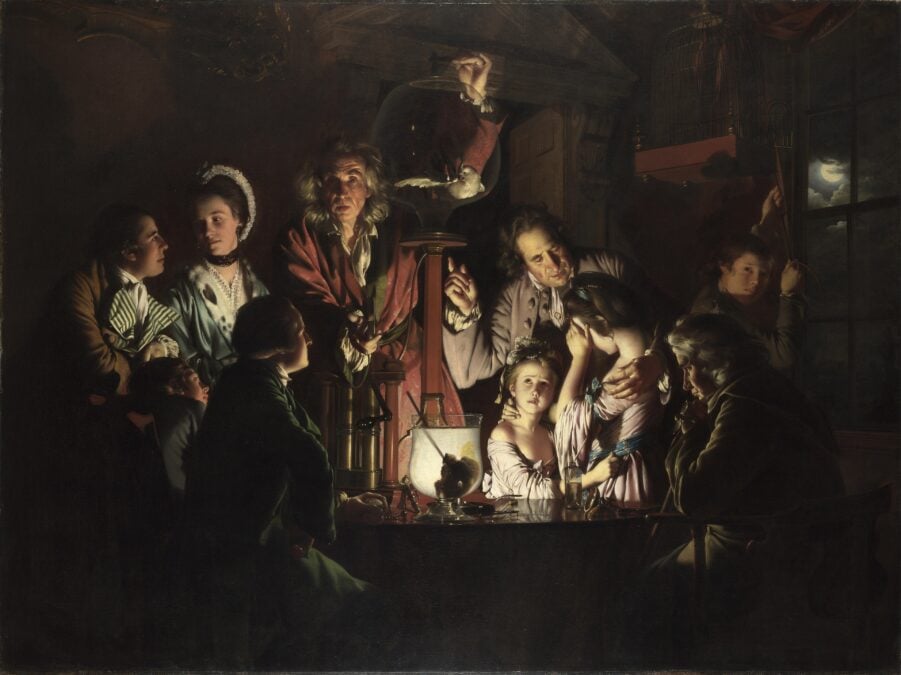
Such science-popularizing exhibitions became increasingly common as a consequence of the Age of Enlightenment that swept through much of the Western world in the 17th and 18th centuries.
Some of the most exciting advances were those that were both mentally and visually intriguing.
For example, the eye-deceiving phénakisticope was developed in the 1800s to explore illusions but became an early form of animation that fascinated Victorian families.

Today we have the pickle trick, demonstrated and described at the 2026 Electrostatics Society of America Annual Meeting, held in June, by Joshua Méndez Harper, an electrical engineer at Portland State University.
Curiously interested in unconventional electrical topics, his previous works include strategies for improving brew quality by reducing static charge generation while grinding coffee (hint: add water).
The glowing pickle trick has so far vacillated between two competing explanations, facilitated by its liquid brine.
Firstly, the electrical heating applied to the pickle boils its liquid and creates internal gas pockets, simultaneously releasing a sizzling ooze and the metallic, pungent stench of electrified pickle.
(Incidentally, Méndez Harper’s experiment was followed by a coffee break, presumably to also air out the room.)
The resultant gas pockets also form an insulation barrier that stops the flow of electricity, cooling the pickle and shrinking the gas pockets, allowing the brine to rush back in toward the electrode – in this case, a fork.
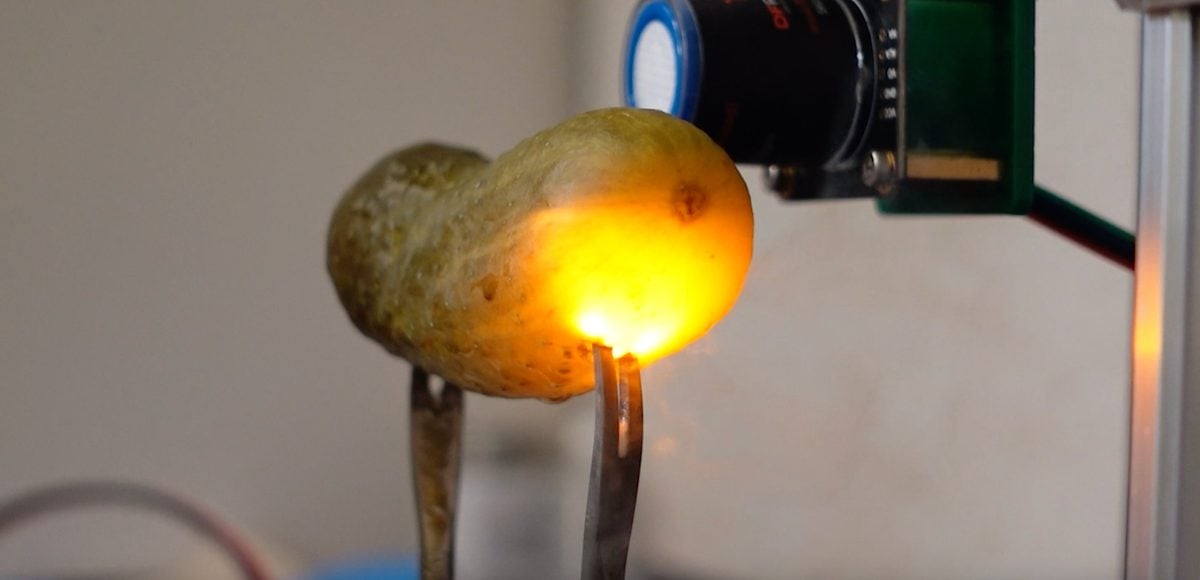
“As that water comes back in toward the electrode a little arc crosses between the liquid and the electrode, just as when you reach for a doorknob and you get a zap,” Méndez Harper explains.
“That doesn’t explain everything that happens, though,” he adds, noting that only one end of the pickle glows.
The second potential pickle-power explanation involves electrolysis, the molecule-splitting process that may one day help humans colonize the Moon.
Within the pickle, electric action splits water into its constituent oxygen and hydrogen gas, the latter of which is especially volatile.
The glow then originates from tiny hydrogen explosions within the pickle, perhaps facilitated by heat from the electrodes.
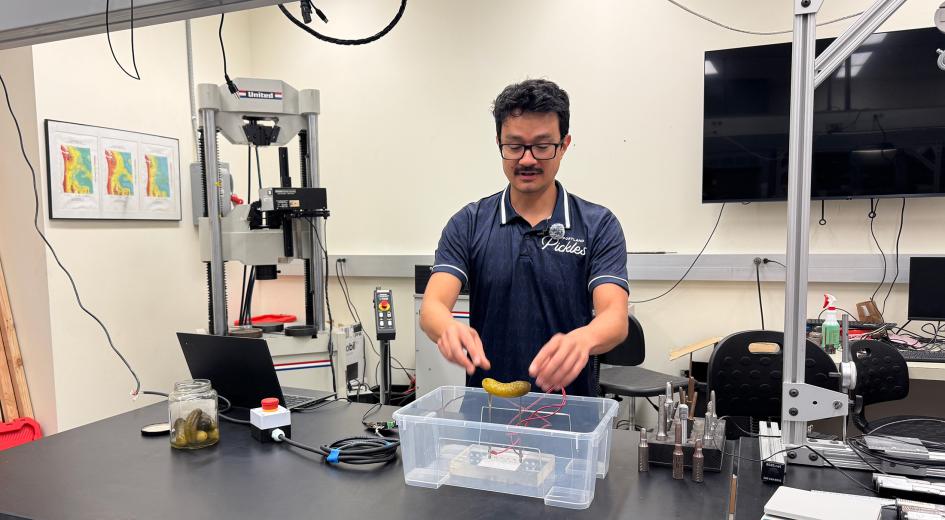
Méndez Harper clarifies that, as often occurs in science, the answer is a combination of both hypotheses:
“There is hydrogen involved, but it’s actually not heat that’s igniting it – it’s the spark. It’s just like why you don’t light a cigarette at a gas station. You’re producing a spark that ignites the gas.”
Additionally, the yellowish-orange glow of the pickle is due to the excitation of sodium atoms, which emit in the part of the electromagnetic spectrum that our eyes perceive as a golden gleam.
This same underlying mineral mechanism delights us on a grander, more explosive scale a few times per year because it dictates the color of fireworks.
“You’re exciting sodium ions, which produce that characteristic orange glow,” Méndez Harper says, adding an interesting potentiality for future pickle-zapping purposes:
“If you were to pickle something in a different salt, you’d get a color unique to those elements.”
Oh, and why does only one side glow?
Possibly because that’s the side where extra salt water collects, giving us a new idiom in the process, so when someone looks radiant, we can tell them they’re “glowing like the salty side of the pickle.”
This article was fact-checked by Rebecca Dyer and edited by Rebecca Dyer. While we pride ourselves on our process, we are only human. If you spot a mistake, please let us know.
What did you think of this news? Leave a comment below and/or share it on your social media. This way, we can inform more people about the hottest things in technology, science, innovation, and gaming!
This news was originally published in:
Original source


