
Brain Scans of 24 People With Long COVID Reveal Signs of Injury to Dopamine Neurons
Scientists have discovered a distinct change in the brains of people with long COVID that might explain some of the illness’s most debilitating symptoms.
The dopamine neurons of some patients could be damaged or burned out.
That is still an early hunch, but a preliminary study in Canada of 24 people with long COVID found distinct changes in some brain regions, compared to healthy participants of the same age.
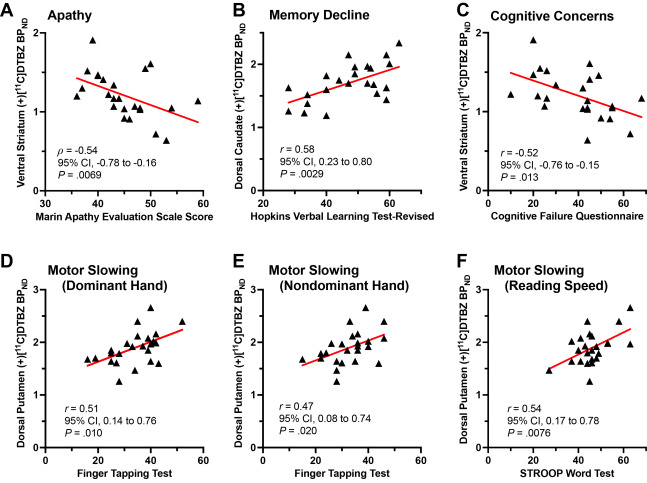
The worse the symptoms of memory decline, slow physical movements, and a lack of motivation, the greater the differences measured in dopamine nerve endings.
“Our findings provide compelling evidence that long COVID involves the loss of dopamine-releasing neurons,” says psychiatrist Jeffrey Meyer from the Brain Health Imaging Center in Canada.
“This kind of injury is well known to produce symptoms like lack of motivation and motor slowing, and may contribute to memory difficulties in other neurological conditions. Our results suggest a similar process is occurring in long COVID.”
Previous studies among people with long COVID mainly focused on brain inflammation and immune changes, but none directly examined whether the brain’s dopamine-producing neurons were affected.
“These results indicate that long COVID is, at least in part, a disorder of the brain’s dopamine system,” argues Meyer.
Dopamine is famously known as the ‘feel-good’ hormone. It’s a crucial chemical messenger in the brain, closely tied to the brain’s reward system.
But there are reasons to suspect that dopamine circuits may be vulnerable to injury during long COVID.
Individuals with long COVID show elevated markers for some brain cells that prune back synapses. This may damage dopamine-releasing neurons.
It’s also possible that SARS-CoV-2 can directly infect dopamine-releasing neurons, injuring them from within.
These brain cells tend to have a high density of receptors that SARS-CoV-2 could theoretically connect to.
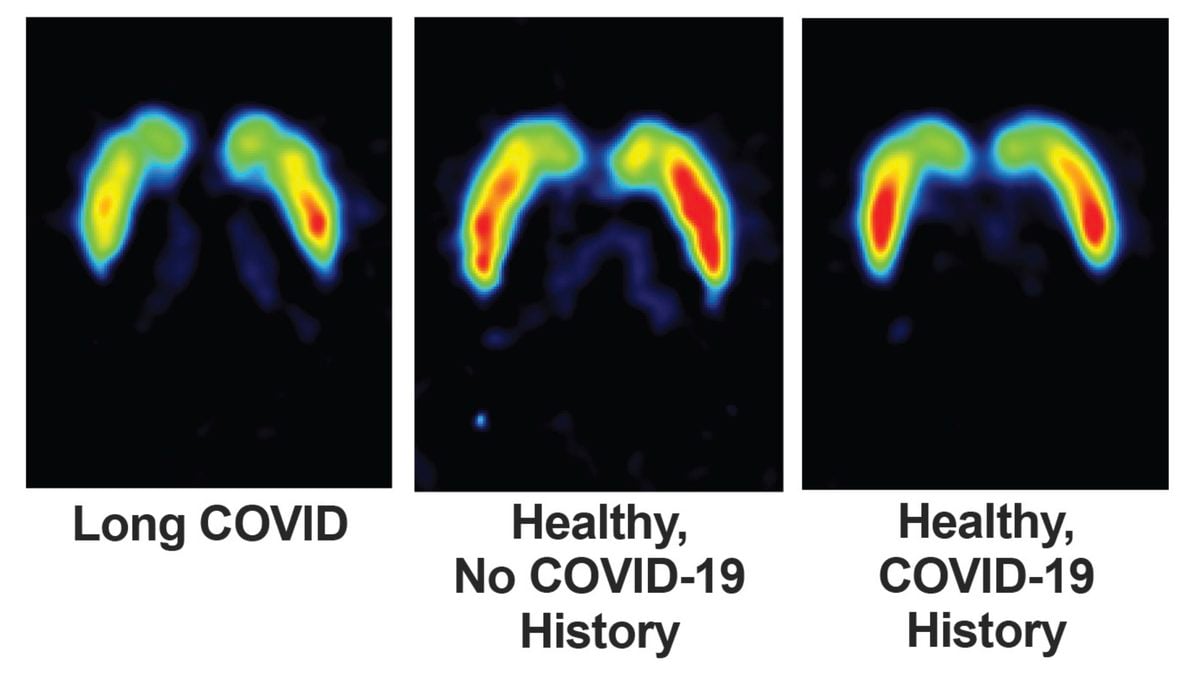
Using PET scans (positron emission tomography) with a radioactive tracer, researchers in Canada measured a marker of dopamine nerve endings among 24 participants with long COVID.
None of these participants had an active infection, but they were all suffering from persistent and debilitating symptoms since first falling ill with COVID. To a certain extent, they all reported a lack of motivation, and as a group, they scored worse on tests of memory and movement speed.
Compared to healthy controls, their brains showed a reduction in the density of dopamine nerve endings within several regions of the striatum.
This part of the brain is involved in motivation, movement speed, and memory.
The severity of some long COVID symptoms among patients was correlated with their density of dopamine neurons.
This suggests that the two are connected.
Roughly 25 percent of the variance in these symptoms among patients with long COVID was associated with a loss of dopaminergic neurons.
“The present study makes a case for a hypothesis that interventions targeting dopamine-releasing neurons in long COVID would have therapeutic impact,” the authors conclude.
“This is a notable shift from present therapeutic development, given that no current trials focus on augmenting functions of dopamine-releasing neurons.”
Brain scans like these measure a protein found on dopamine nerve endings rather than measuring neuron density directly.
However, they are very useful when investigating brain changes in living patients.
The only way to directly examine dopamine-releasing neurons is to examine postmortem brain tissue.
One small autopsy study found fewer dopamine neurons in people who died with severe COVID-19, but most were elderly, and some had signs of early dementia, including one person with Parkinson’s, which confounds the results.
This new investigation is only preliminary, but it suggests that perhaps long COVID impacts dopamine-releasing neurons in broadly similar ways to Parkinson’s.
If that is verified, then drugs like L-dopa, which are used for Parkinson’s, could theoretically be repurposed to treat patients with long COVID.
“These interventions would enhance tonic dopamine release broadly, and phasic release in intact synapses, thereby reducing impact of lost synapses,” the study authors theorize.
Still, these drugs aren’t to be taken lightly, as they can have significant side effects.
They may also only work for patients with a certain type of long COVID. The symptoms of this post-viral condition are very diverse, and not all patients report slower physical movements, a lack of motivation, or worsening memory.
It’s possible that other manifestations of long COVID don’t involve dopamine neurons in the same way.
The researchers argue for future studies in larger, similarly well-controlled cohorts to help confirm the robustness and generalizability of these findings. It’s worth noting Meyer has a pending patent application for a dopamine-based long COVID treatment.
Susan Deuville is a patient with long COVID who participates as a lived-experience research advisor to Meyer.
“For five years I have been seeking answers on what happened to me after I contracted COVID in 2021,” says Deuville.
“It was a crushing loss of the life I had and the person I was before. The research of Dr Meyer brings hope. It also validates what long COVID sufferers have always known – long COVID is real, and the effects are devastating.”
The research has been published in eBioMedicine.
This article was fact-checked by Rebecca Dyer and edited by Rebecca Dyer. While we pride ourselves on our process, we are only human. If you spot a mistake, please let us know.
What did you think of this news? Leave a comment below and/or share it on your social media. This way, we can inform more people about the hottest things in technology, science, innovation, and gaming!
This news was originally published in:
Original source
