
‘Rusty Treasure’ in Austria Revealed as Europe’s Largest Cache of Iron Age Iron Bars
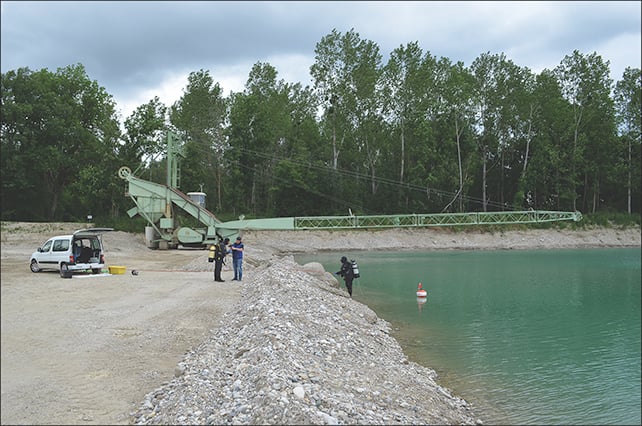
In 2019, workers at a gravel extraction plant in Deinham, close to the Danube River in Austria, discovered a vast haul of iron bars in amongst the underwater gravel.
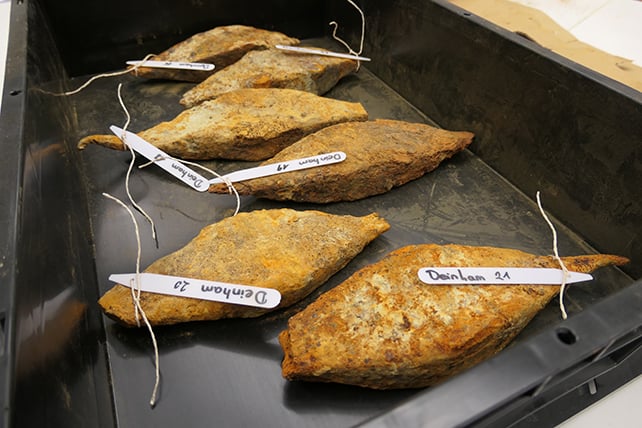
There were hundreds and hundreds of these bars, averaging almost 30 centimeters (nearly 12 inches) in length, hammered into a uniform, bipyramidal shape – meaning they were pointed at both ends.
In a study published in Antiquity, archaeologists Peter Trebsche from the University of Innsbruck in Austria, and Marion Berranger from the Archaeomaterials Research Institute in France, have now reported their findings after carefully analyzing this “rusty treasure”.
The researchers confirmed that these were ‘semi-products’, fashioned into shapes for easy transport, ready to be reworked later – and that the find is unprecedented, the largest mass discovery of prehistoric iron bars in Europe.
In total, 540 bars or parts of bars were recovered, weighing around a tonne (2,280 pounds) of iron altogether – enough to make 500 swords or 8,000 nails.
The value of the haul would’ve been huge, the researchers report.
“Even if we take material losses during manufacture into account, the iron from Deinham would have been sufficient to equip a large group of warriors with weapons,” says Trebsche.
Radiocarbon dating suggests these bars are at least 2,200 years old, with some perhaps dating back as far as the 4th century BCE.
And while there are a lot of questions that remain unanswered – including where the load was from, where it was going, and what it would ultimately be used for – this is a rare and fascinating insight into the trade and manufacturing of the time.
“It is incredible that such a large quantity of iron was transported at once and was available in a single exchange transaction in the Late Iron Age,” says Trebsche.
“This finding demonstrates the increased capacities of iron production that were reached in the 3rd and 2nd century BCE in the Danube region.”
Another unknown is how the iron got to the bottom of the riverbed, but the most likely explanation is a shipwreck. Nothing of the ship remains though, so it’s not certain.
While it wasn’t unknown for some communities around this time to place iron in the water as part of rituals or ceremonies, that doesn’t seem to be the case here. The iron looks to have been made to be transported, and there’s little other evidence of similar practices in this region by European Iron Age cultures of the time (known as La Tène).
“The possibility of ritual deposition cannot be excluded, but the homogeneous semi-product assemblage from Deinham differs considerably from the more varied composition of ritual river deposits,” write the researchers in their published paper.
“Moreover, Late Iron Age river finds are generally rare in the Eastern La Tène Culture, so the Deinham assemblage does not fit into the established regional pattern of ritual behavior.”
Specialized or adapted boats would’ve been needed to transport this amount and weight of cargo, the researchers suggest, while the iron may have been exchanged for slaves, cattle, or silver or gold coins.

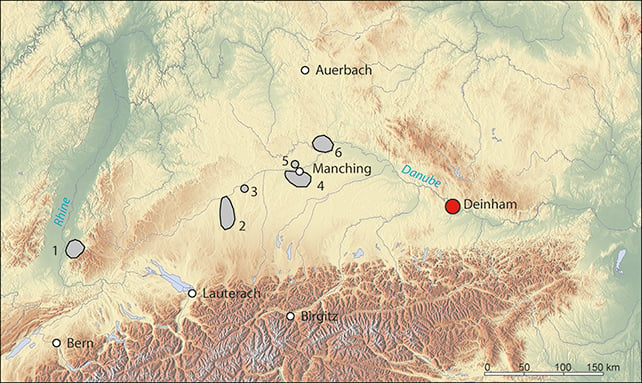
The study goes on to identify several iron-smelting regions upstream that may have been the source of these 540 bars, with the closest around 220 kilometers (137 miles) away along the Danube.
We should know more when further examinations of the metal have been completed, which will help to identify the places it was mined from, and whether the bars came from a single location or several.
Related: A 3,000-Year-Old Workshop May Have Revealed The Origins of The Iron Age
For now though, we know the scale of the discovery, and how valuable it is.
“It is nothing short of a minor miracle that the largest mass find of prehistoric iron bars in Europe did not end up at scrap dealers, but was reported to the Austrian monument authority,” says Trebsche.
“I am sincerely grateful to the finders that they decided to donate this extraordinary trove to a state museum collection.”
The research has been published in Antiquity.
This article was fact-checked by Rachel Garner and edited by Fiona MacDonald. While we pride ourselves on our process, we are only human. If you spot a mistake, please let us know.
What did you think of this news? Leave a comment below and/or share it on your social media. This way, we can inform more people about the hottest things in technology, science, innovation, and gaming!
This news was originally published in:
Original source
