
Like an Ancient ‘Turducken’: Fossil Captures Cretaceous Sea Monsters Devouring Each Other
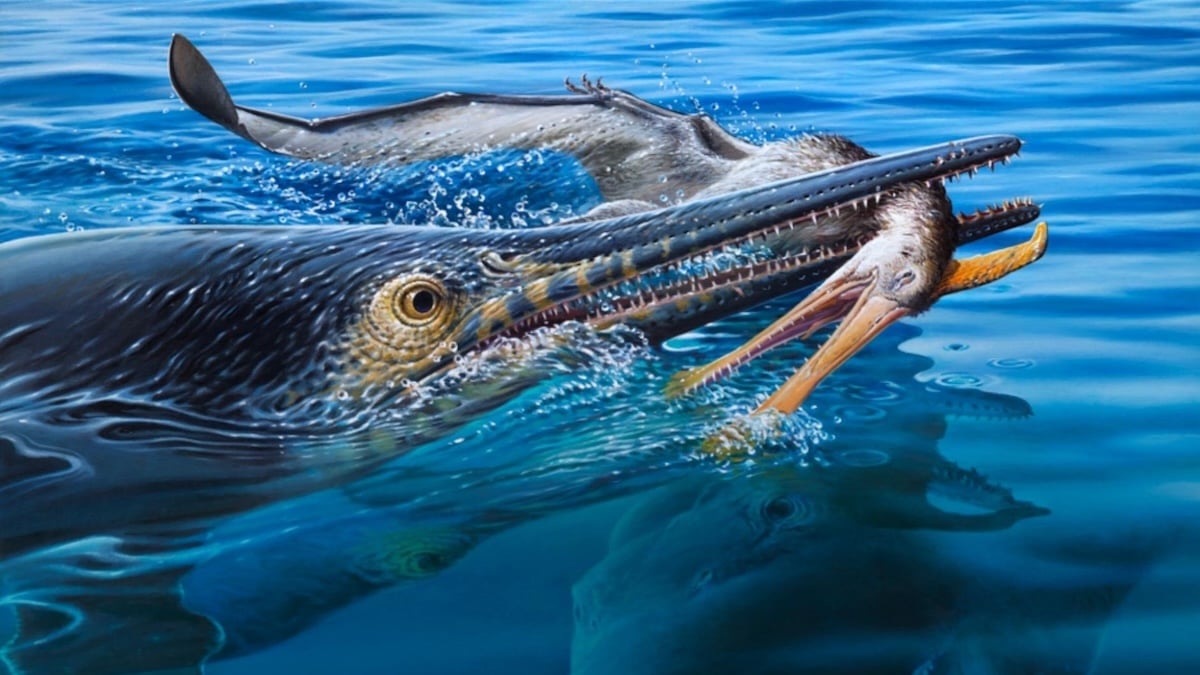
Making a turducken – stuffing a chicken inside a duck, then stuffing that inside a turkey – seems like a recent Thanksgiving tradition, but paleontologists in Australia may have found the dinosaur-era equivalent.
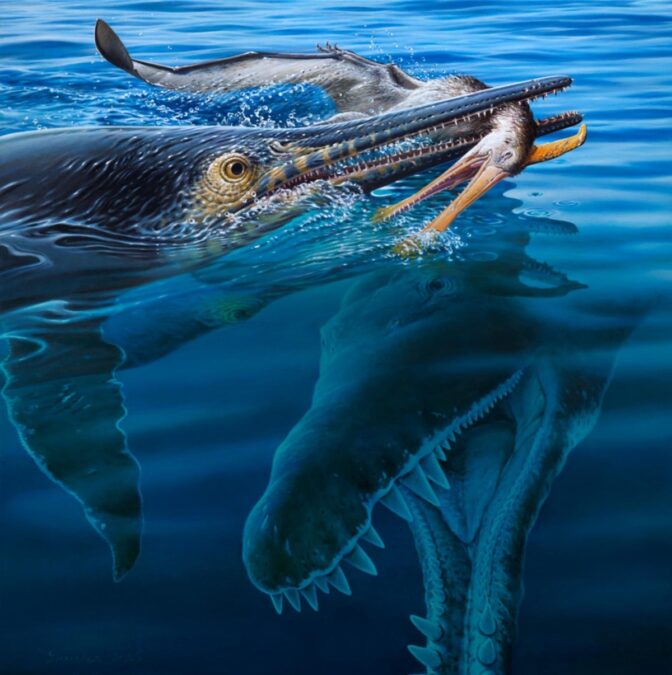
In this case, the ‘chicken’ is a hapless flying reptile that swooped too close to the ocean and was eaten by a marine predator. That meal may have been its last, though, because it was soon gobbled up by an even bigger sea monster.
This incredible moment in time has been frozen in the fossil record for over 100 million years, providing a rare glimpse of the ancient food web in action, and marking the first evidence that pterosaurs were on the menu for this kind of marine reptile.
“It’s one of the clearest examples ever discovered of a three-tier predator interaction and offers an unprecedented snapshot of behavior in Australia’s Cretaceous seas,” says Dean Lomax, a paleontologist at the University of Manchester in the UK, who was not directly involved in the study.
The Australian outback is now one of the driest places on Earth, but that wasn’t always the case. In the early Cretaceous, large swathes of the continent’s interior were covered by the Eromanga Sea.
That left behind a vast fossil bed rich in not only ancient sea life, but also the pterosaurs that ruled the skies overhead, and dinosaurs that roamed the land and river deltas around it.
The discovery began with the unlucky ‘duck’ in the middle of the food chain. Paleontologists found bones belonging to Platypterygius australis, a marine reptile that they estimated to have been about 6 to 7 meters (20 to 23 feet) long.
As a type of ichthyosaur, this creature would have resembled a modern-day dolphin, except that its snout was lined with razor-sharp teeth. These helped it catch fish, squid-ish creatures – and, apparently, pterosaurs.
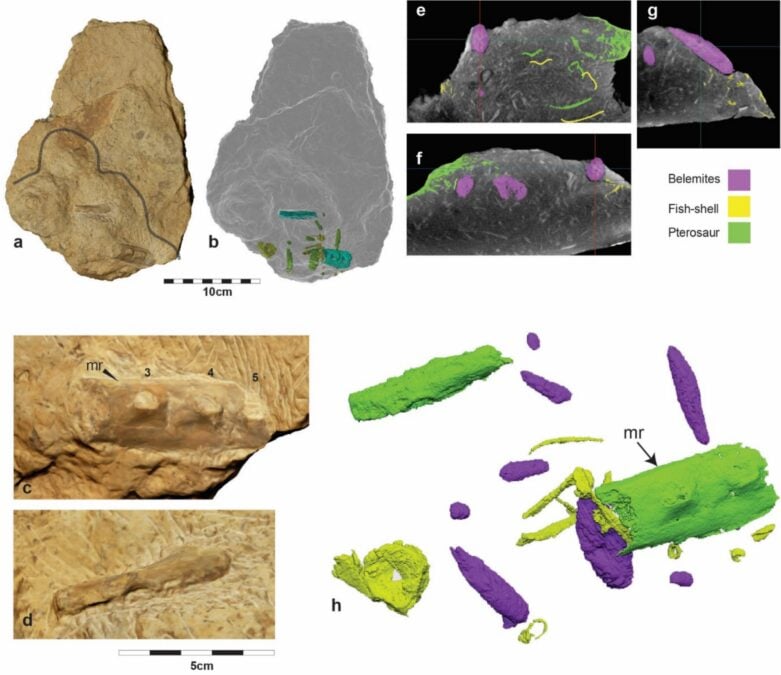
Within the skeleton, paleontologists discovered a globular concretion that they suspected was its fossilized stomach contents. Neutron tomography scans of this chunk of rock revealed the usual menu: fish bones, shells, and fragments of squid-like cephalopods.
But among them lay something unexpected: two pieces of a pterosaur jawbone.
Ichthyosaurs were already known to be opportunistic feeders, eating whatever small creatures the ocean offered up. This discovery marks the first direct evidence that this also included pterosaurs, as they themselves came to feed on fish.

But of course, we’re still missing the ‘turkey’ in this recipe. The poor Platypterygius was in pretty bad shape, and seemed to have died a violent death soon after the pterosaur did.
“The vertebrae were split; ribs were missing and numerous bones displayed large crushing bite marks,” says Matt White, a paleontologist at the University of New England.
“One vertebra even preserved a rib jammed against a broken margin, strongly suggesting forceful jaw processing rather than simple post-mortem damage.”
The suspect list for this Cretaceous crime was a short one.
“The only predator known from the Eromanga Sea capable of producing injuries of this magnitude is the giant pliosaur Kronosaurus queenslandicus,” says White.
Growing more than 10 meters long, Kronosaurus was the apex predator of the seas of its time. Its long, toothy jaws look almost crocodilian, feeding a barrel-shaped body propelled by four flippers.
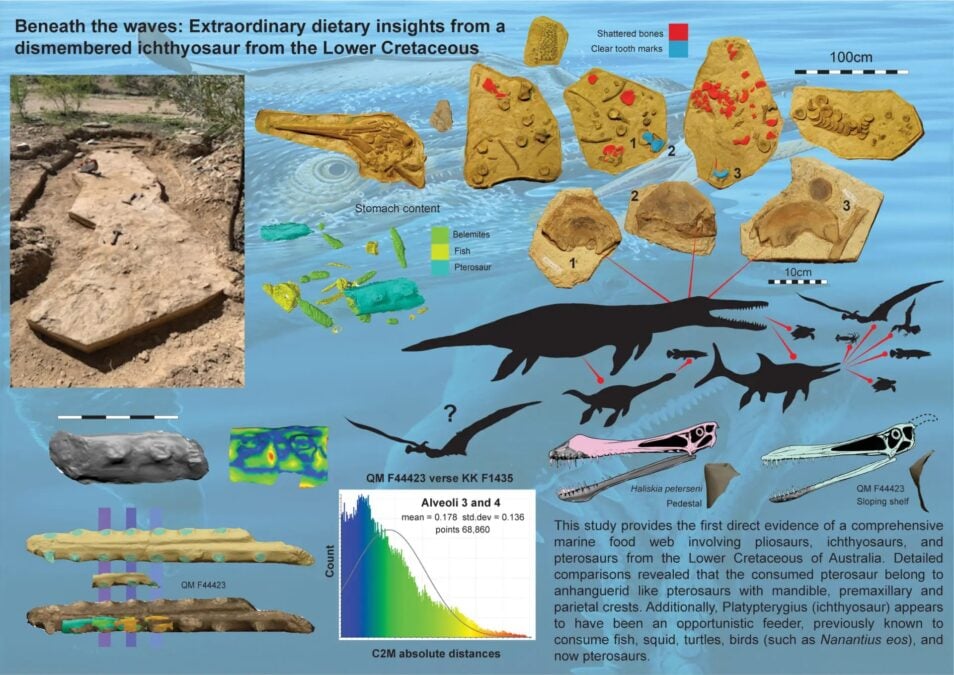
“This discovery provides the first definitive evidence of food web interactions among these three groups and marks the first recorded instance of an ichthyosaur consuming a pterosaur or part thereof,” the researchers conclude in a paper describing the find.
Related: Prehistoric Sea Monster Didn’t Stick to The Oceans, Suggests Fossil Study
It’s generally rare that fossils capture direct evidence of the behavior of extinct animals, but when they do, the stories they tell are usually incredible. Recently, fossil footprints found in South Korea captured a giant pterosaur apparently hunting a small animal on land.
Over in Argentina, a megaraptor was discovered last year with a piece of crocodile still hanging out of its mouth.
And in Brazil, a new species of toothy pterosaur was discovered in fossilized vomit, after it seemingly disagreed with the stomach of a spinosaurid dinosaur.
The new discovery was reported in the journal Gondwana Research.
This article was fact-checked by Clare Watson and edited by Clare Watson. While we pride ourselves on our process, we are only human. If you spot a mistake, please let us know.
What did you think of this news? Leave a comment below and/or share it on your social media. This way, we can inform more people about the hottest things in technology, science, innovation, and gaming!
This news was originally published in:
Original source
