
Experts Met at MIT to Discuss The Possibility of Alien Tech Around Black Holes. Here’s What Was Discussed.
Last June, while most of us were sweating it out and scrolling socials, more than two dozen of the best scientific minds in the world headed to MIT.
For two days, they gathered around whiteboards and lecture theaters discussing a pretty out-there idea: alien technology.
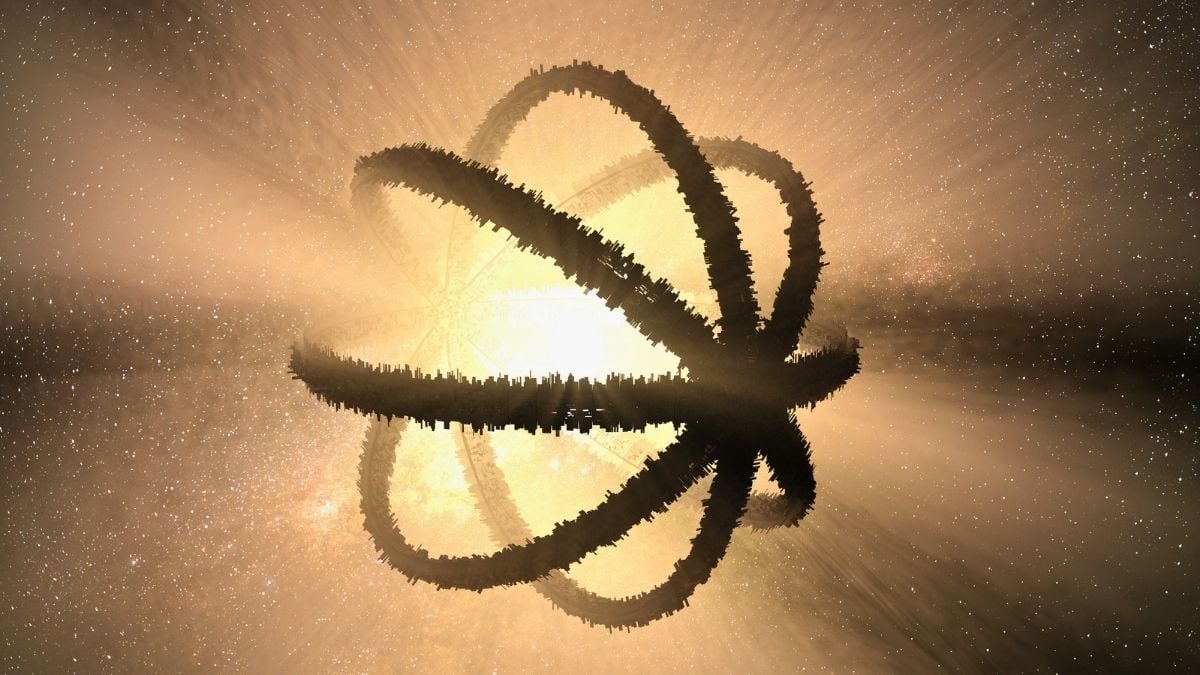
Not just any alien tech, mind you, but the possibility that extraterrestrial intelligent life may have built energy-harvesting structures called Dyson spheres around black holes.
We know how that sounds.
When a paper came out describing the get-together a few months ago, we immediately had to interview someone in the room who could tell us exactly what went down.
It turns out it was grounded in a lot more sensible science than you might think.
“We’re aware it’s a very out-there theory,” Olivia Curtis, lead author of the paper and a Postdoctoral Fellow at the Penn State Extraterrestrial Intelligence Center (PSETI) at Pennsylvania State University in the US, told ScienceAlert.
“But we wanted to ground everything in physical facts and try to actually think of what physical observables we might actually be able to detect … It was a very fun two days.”
“Even if our ground hypothesis isn’t correct and it’s not aliens, usually we find something interesting that we had never thought of before,” she explains. “Aliens are always the last solution but maybe one day we’ll get there.”
So, let’s unpack this a little.
Dyson spheres are hypothetical engineering structures that could be built by advanced civilizations to harness energy from a natural energy source.
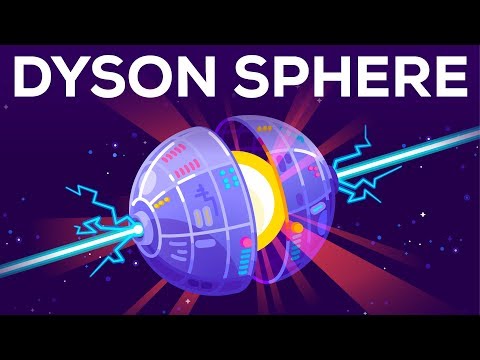
The concept was popularized by theoretical physicist Freeman Dyson in the 1960s – originally proposed as megastructures built around a star to harvest its energy.
In fact, Dyson spheres are thought of as a telltale sign of a civilization that’s reached Level II on the Kardashev Scale, where it’s capable of harnessing its Sun’s energy.
But at the “Dyson Minds 2025 Workshop” – which was run by Penn State, MIT, The Ultraintelligence Foundation – astronomers, astrophysicists, AI experts, engineers, and industry experts took the idea a step further.
Instead of a star, what if someone put these structures around a black hole?
“These hypothetical structures sound really sci-fi, but the more we start to think about putting data centers out in space, [they] are starting to sound less and less science fiction-y,” explains Curtis.
“We’re imagining that if some form of life wanted to extract the largest energy gradient that they possibly could, they’d naturally find themselves at the center of their galaxy.”
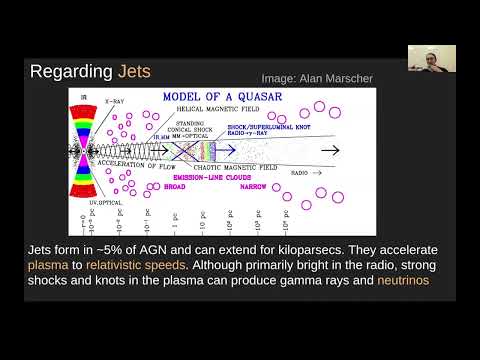
Supermassive black holes are known to lurk at the hearts of most galaxies, and while they’re famous for ‘slurping up’ everything in their vicinity, they actually blast out a whole lot of energy too. The jets they emit, for example, contain more energy than millions of Suns.
Others have previously proposed this same idea, but this is the first time so many people from different industries came together with this single focus.
The goal goes beyond simply “finding aliens” (although that would be nice).
“Even if our ground hypothesis isn’t correct and it’s not aliens, usually we find something interesting that we had never thought of before,” Curtis explains. “Aliens are always the last solution but maybe one day we’ll get there.”
So if black holes suck everything up… how would a data center survive around one?
Curtis explains that the common idea of black holes acting like a giant vacuum in space isn’t quite correct – once you get past the event horizon, you do get stuck in the black hole. But a hypothetical Dyson sphere wouldn’t be that close.
She compares it to the Gargantua black hole in the 2014 film Interstellar and the accretion disk around it.
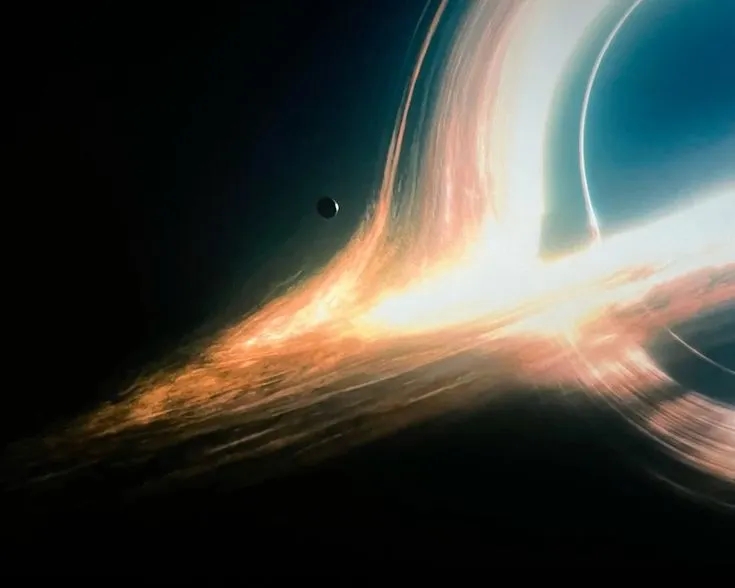
“We’re about 1,000 times farther away from that,” she explains.
In fact, black holes are so radiant that “you need to be about a parsec or about 3 light-years away from the black hole in order to actually have a satellite not immediately melt just due to the radiation,” says Curtis.
Of course, that introduces its own challenges. Because if the Dyson sphere is like a giant data center, then you’ve got a lot of lag between those on either side of the black hole.
“The other idea is that maybe we’ll see them try to propel these hard drives around across each other.” – Olivia Curtis, astronomer
“They can either beam that information, in which case we might see like periodic bursts of information just from the fact that at some point those orbits are going to align and start pointing towards us,” says Curtis.
“It turns out that at these distance scales, if you want to transmit a zettabyte of information, it’s just faster to sling your hard drive at it instead of trying to beam the information yourself.”
If any of these possibilities were actually true, the important thing is that there would be signs we could see, even here from Earth.

Curtis’s research specifically is looking at infrared signatures from black holes to see if there’s any evidence of something outside of the ordinary.
“We already have these good understandings of what the region around a black hole should look like, and then really it’s about looking for outliers,” she explains.
One of the datasets that’s being focused on is that of the Event Horizon Telescope Team, which captured images from the black hole at the center of galaxy M87 in 2019 (our first black hole pic ever!), and the black hole at the center of our own galaxy, Sagittarius A*, in 2022.
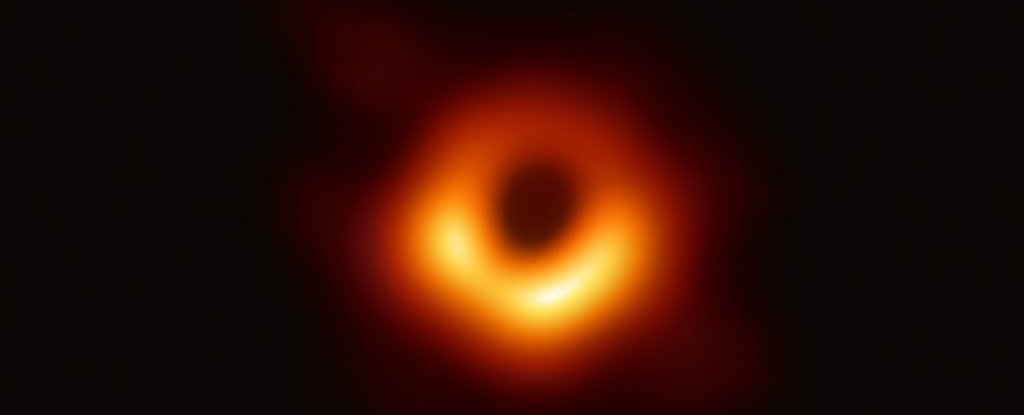
“Maybe there’s some blips, or some weird perturbations in their data that current algorithms are just smoothing over because they’re trying to get a pretty picture of the black hole, not looking at what the outliers actually look like.”
While there’s been no evidence of any of these Dyson spheres around black holes to date, the Dyson Minds 2025 Workshop has at least mapped out what we’d be looking for.
Related: Dyson Spheres Around Black Holes Could Reveal Alien Civilizations, Scientists Say
For Curtis, her hope is that within her lifetime we’ll discover planets in the rubble around a black hole – something an increasing number of studies suggest is possible.
“One of my favorite things to think about astronomy is to think, what would the night sky look like if we were in a different place within the galaxy?” says Curtis.
“And a planet right next to a supermassive black hole? That must look so cool.”
A paper on the workshop was published in Publications of the Astronomical Society of the Pacific.
This article was fact-checked by Michael Irving and edited by Peter Dockrill. While we pride ourselves on our process, we are only human. If you spot a mistake, please let us know.
What did you think of this news? Leave a comment below and/or share it on your social media. This way, we can inform more people about the hottest things in technology, science, innovation, and gaming!
This news was originally published in:
Original source
