
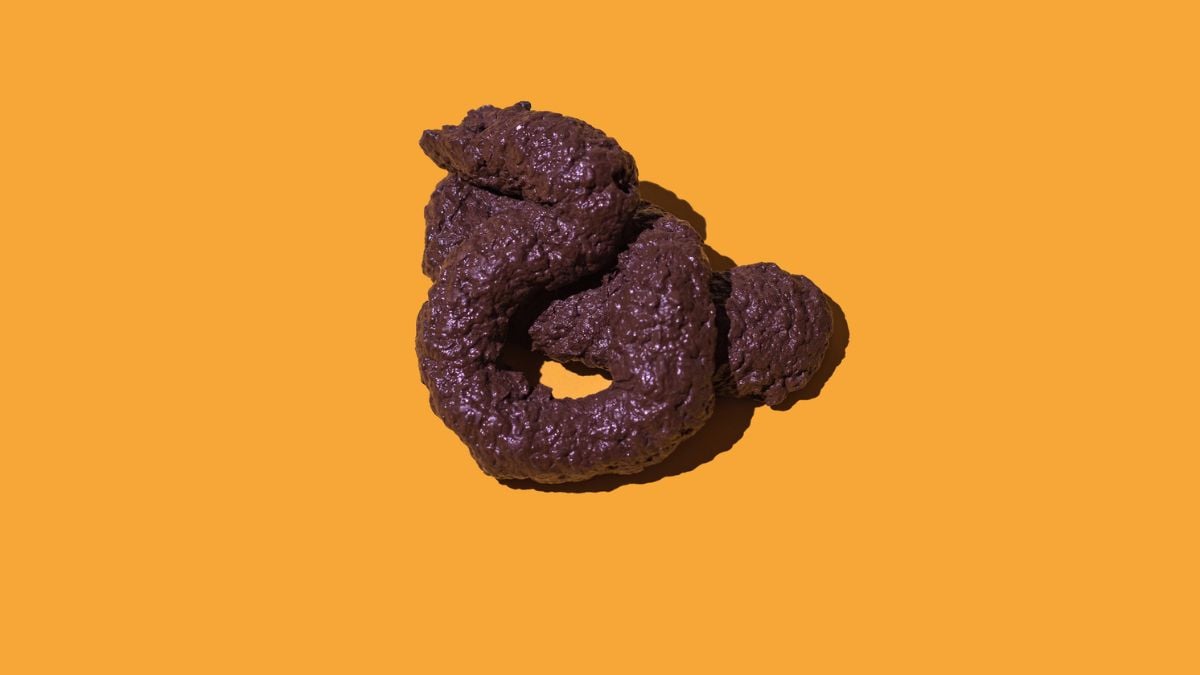
There Is a Universal Law in The Shape of All Poop, Physicists Reveal
Charles Darwin has gone down in history for writing On the Origin of Species, but that wasn’t his only contribution to our understanding of the natural world.
His last manuscript could just as well have been called On the Origin of Feces.
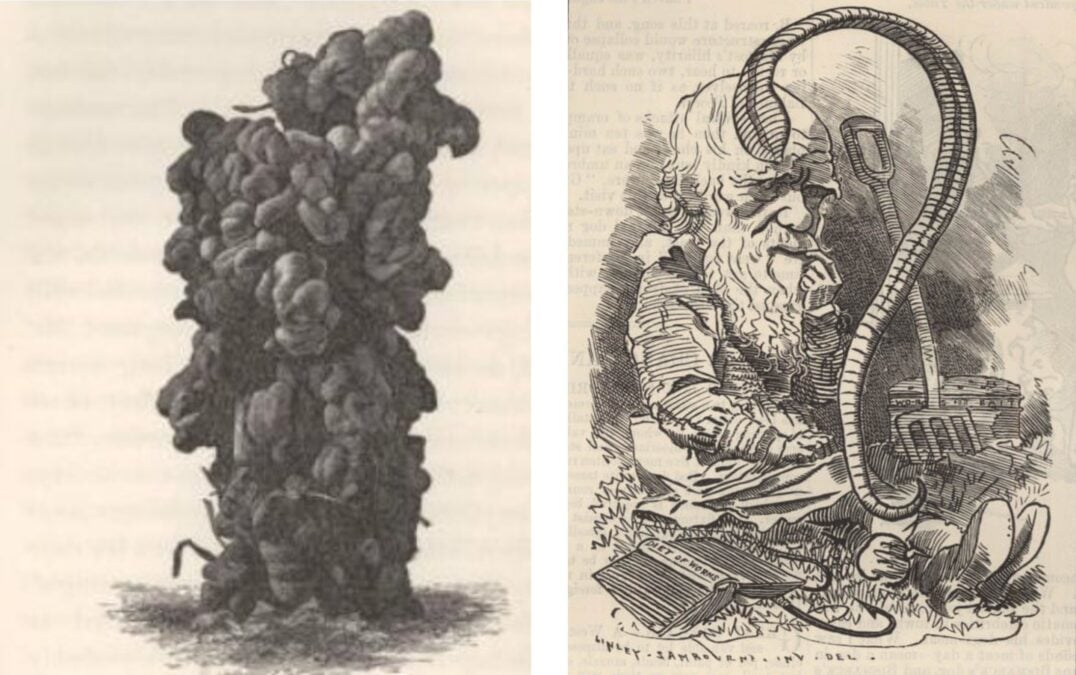
In his final working years, the co-discoverer of evolution became downright enamored with worm poop.
He made detailed descriptions of how worm poop coiled into tower-like spirals.
In November 1880, Darwin wrote to a friend: “My whole soul is absorbed with worms just at present!”
More than a century later, three physicists, Mehdi Habibi, Neil Ribe, and Daniel Bonn, have used worm castings to describe the universal mechanics of poop coils – finding some sticky principles that explain what we see.
“Anyone who has observed animal excreta has likely wondered about the characteristic coiled morphologies that appear across diverse species,” the physicists write, who hail from institutions in the Netherlands and France.
“Human fecal morphology, though rarely studied scientifically, exhibits similar coiling patterns,” they add.
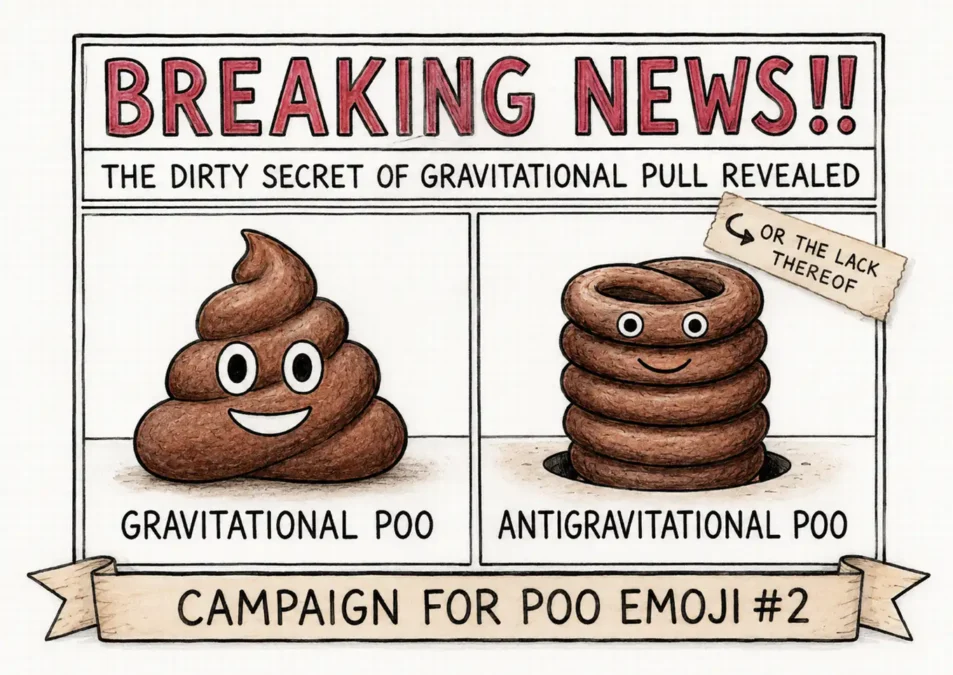
The soft-serve ice cream shape of the poop emoji (💩) is characteristic of an animal that poops downward.
The coil that forms is influenced by the size of the intestinal walls, muscle contractions, the height of the fall, and the viscosity of the fecal material.
Even under perfect circumstances, however, not all poops lands in a cone-shaped coil.
The so-called ‘antigravitational poo’ is missing from our digital discourse, argue Habibi, Ribe, and Bonn.
Some worms, like those that Darwin described, can poop against gravity, and that makes all the difference in the shape of their coils.
So much so that the team behind this new study are planning to design a second poo emoji and officially propose it to the Unicode Consortium.
The research would no doubt make Darwin proud.
For the study, the three physicists examined how fresh fecal matter from lugworms (Arenicola marina) coiled compared with pea dough, rice noodles, and spaghetti under different conditions.
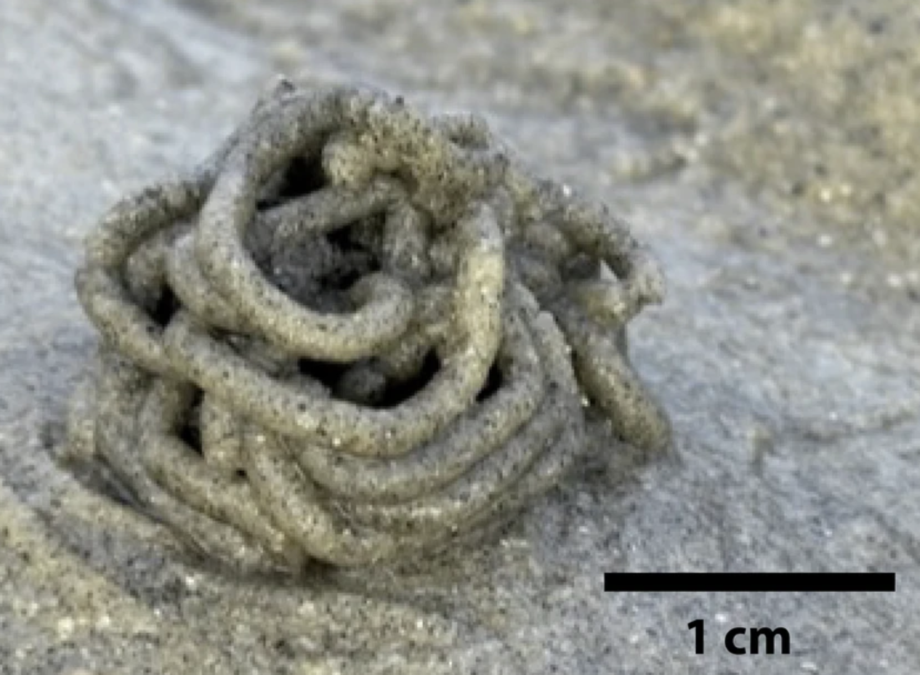
Unlike most other animals, lugworms poop against gravity.
They live in U-shaped burrows below the sand, and at low tide, they place their anus below the entrance and push their feces out onto the beach.
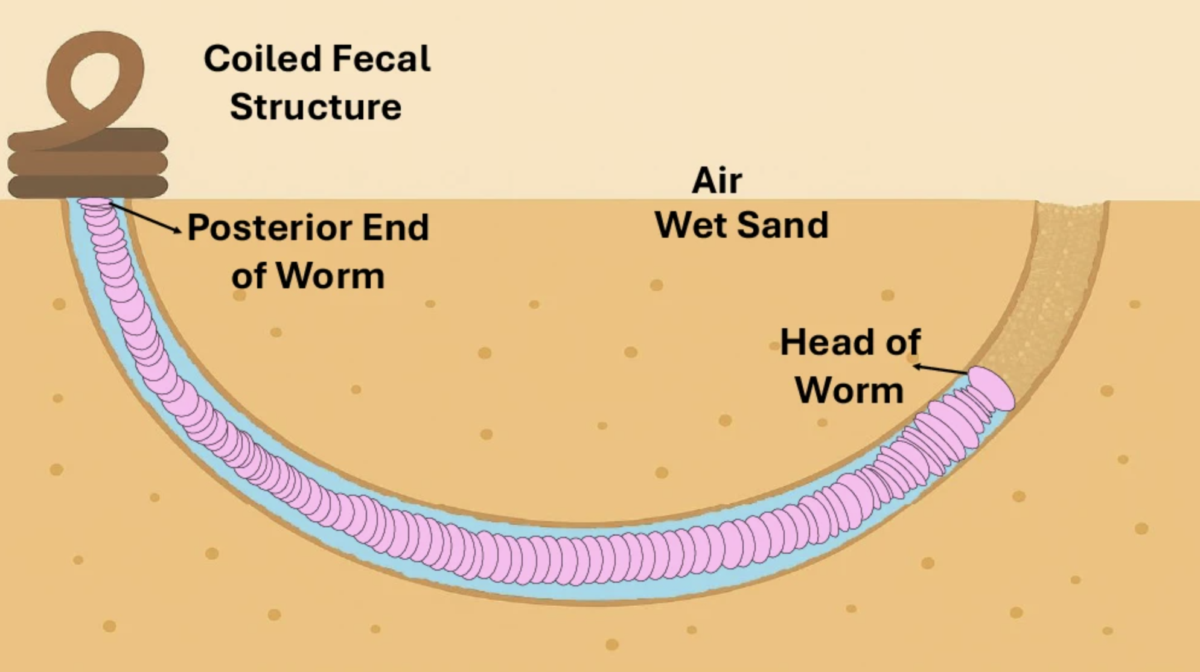
As a lugworm defecates, Habibi, Ribe, and Bonn have found that the width of its poop coil stays constant.
It doesn’t taper to a tip as the poop emoji does. This matches what Darwin noticed all those decades ago.
Nevertheless, the lugworm’s poop still follows the laws of elastic rope-coiling theory, which describes how ropes and other materials coil. Its unique shape is just a product of its upwards extrusion (and the stiffness of the poop).
“The coiled structure maintains its geometric form against the hydraulic forces encountered during tidal inundation and sediment reworking,” the physicists explain.
The form is thought to prevent the entrance from clogging or collapsing.
Though it may sound silly, this is some serious science.
“The identification of coiled structures… in excreta has broader implications for understanding how organisms utilize physics in functional morphology,” the study authors write.
Related: Wombats Are The Only Animals That Poop Cubes, And We Now Know How
In the case of the earthworms that Darwin studied, their poop coils helped create and nourish Earth’s fertile topsoil, the foundation on which many of our ecosystems depend.
In his last published work, which Darwin devoted to worms, he wrote: “It may be doubted if there are any other animals which have played such an important part in the history of the world as these lowly organized creatures.”
Had an emoji for anti gravitational poop existed in Darwin’s day, he would have surely used it often.
The study is published in Nature Communications.
What did you think of this news? Leave a comment below and/or share it on your social media. This way, we can inform more people about the hottest things in technology, science, innovation, and gaming!
This news was originally published in:
Original source
