
Your Brain Might Predict Social Interactions Before They Happen
Imagine spotting someone across the room at a party, then heading over to speak to them. According to new research, your brain could be rehearsing those actions in your head before you actually start moving.
The study involving zebrafish taps into what is a natural and essential behavior across the animal kingdom.
From herds of sheep and schools of fish to late-night cocktail parties, deciding to approach others often takes some muster – weighing up if we should and how to do it, and what the consequences might be.
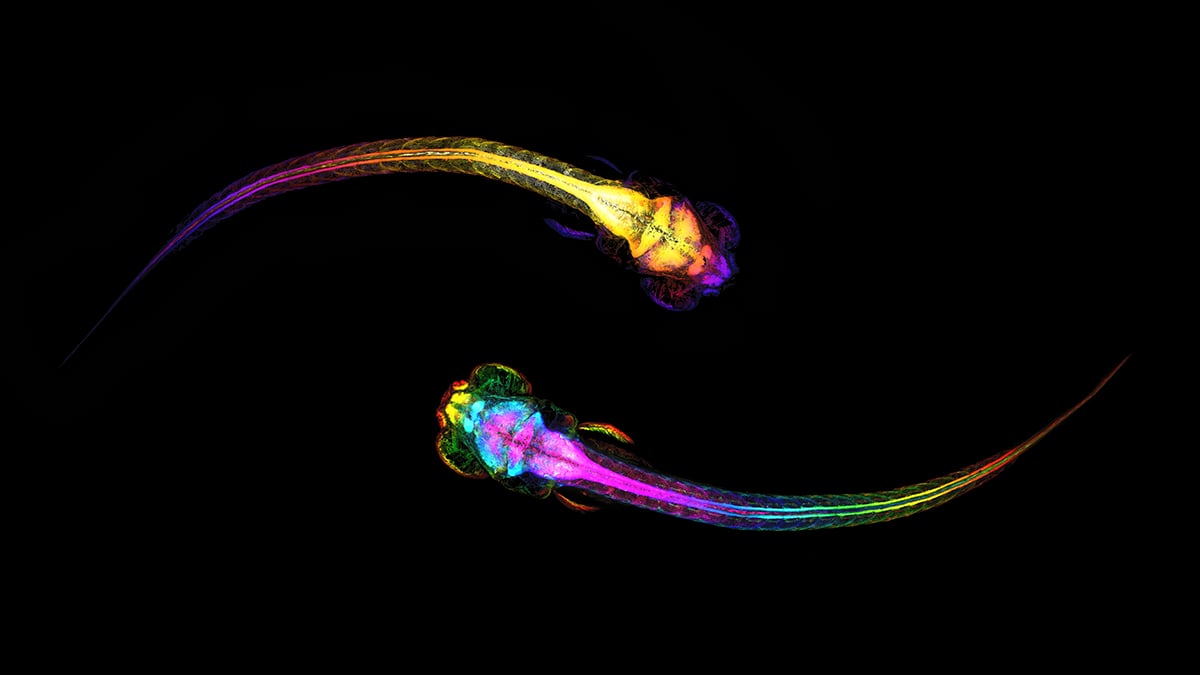
To investigate, researchers at the Hebrew University of Jerusalem monitored the brains of zebrafish as other fish swam by.
Zebrafish are often used in studies as a simple substitute for the brains of other species; they are vertebrates like us, and we share some biological similarities.
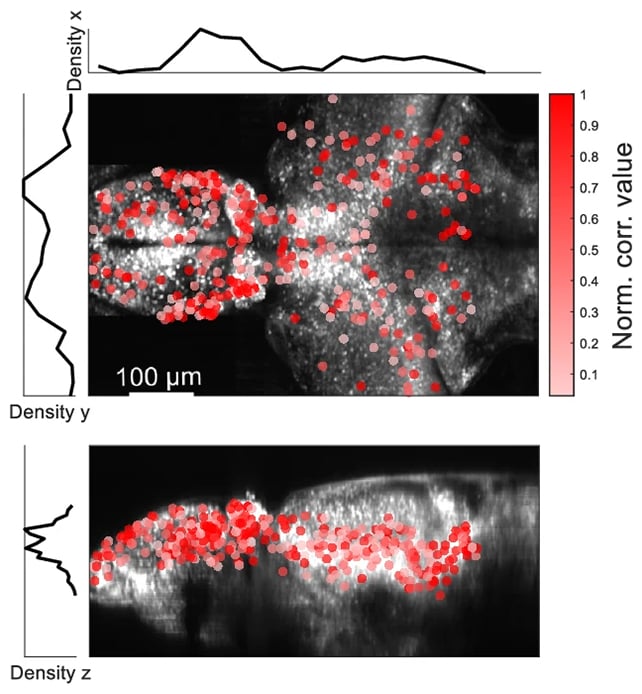
The researchers found that when the monitored fish chose to make a move to join their peers, a recognizable burst of neuron activity preceded their advance.
This activity was observed in the pallium, a part of the zebrafish brain associated with more complex behaviors.
It’s thought to be the equivalent of the amygdala and hippocampus in the human brain – that’s where we process emotions, store memories and add context, and assess social and emotional cues.
“Distinct distributed neural activity emerges seconds before approach movements, characterized by increased activity in pallial neurons and reduced activity in midbrain and hindbrain populations,” the researchers write in their published paper.
“These coordinated dynamics reliably predict upcoming approach movements across regions and account for individual differences in social behavior.”
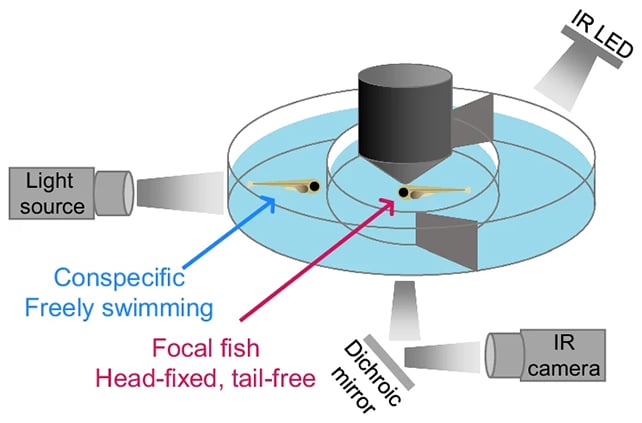
The neural signature was specifically social, and didn’t show up when the zebrafish made movements to chase a moving dot rather than another fish.
What’s more, the “coordinated dynamics” seen by the team were stronger in the fish that were more social – those more likely to want to go chasing after a fellow zebrafish.
When the researchers used lasers to destroy the specific pallium cells triggered in combination with social movement, the social behaviors in the fish stopped – showing the importance of this particular brain region.
The researchers also noticed that social interactions were more likely to happen when the two fish were in sync in their movements. Being social seems to go in tandem with synchronized movements.
“This study identifies a brain-wide neural signature of social approach that emerges before movement begins,” says neuroscientist Lilach Avitan, from the Hebrew University of Jerusalem.
“This signature predicts not only whether an upcoming action will be social, but also how strongly socially driven the individual is.”
Of course, this brain activity was observed in zebrafish, so we don’t yet know if the same processes occur in humans.
Fish behavior also varied: Some of the fish in the study didn’t make any sort of social movements; maybe they were introverts.

However, given the detailed brain scans carried out by the researchers, and what we know about zebrafish biology, there are good reasons to believe these predictive neuron bursts could be happening in other species and mammals too.
The researchers suggest that their findings could help explain why some of us are more social than others, and further down the line, be used to inform support for people who have difficulty socializing.
The burst of activity seen in some parts of the zebrafish brain suggests that there’s some kind of mental build-up required for social interactions, and one that’s possibly deeply embedded across species evolution.
The study adds to our growing knowledge of brain mechanisms linked to social behavior, which are essential in so many areas of life, but the researchers acknowledge there’s plenty of work ahead.
Related: Blushing May Have Hidden Social Advantages, Experts Suggest
“Further research is required to uncover how this neural distinction between approach and non-approach movements is shaped by development, prior social experience, neuropeptides, genetics, and internal states,” write the researchers.
“Our work established a robust framework for dissecting the contribution of each factor at the functional neural level.”
The research has been published in Nature Communications.
What did you think of this news? Leave a comment below and/or share it on your social media. This way, we can inform more people about the hottest things in technology, science, innovation, and gaming!
This news was originally published in:
Original source
