
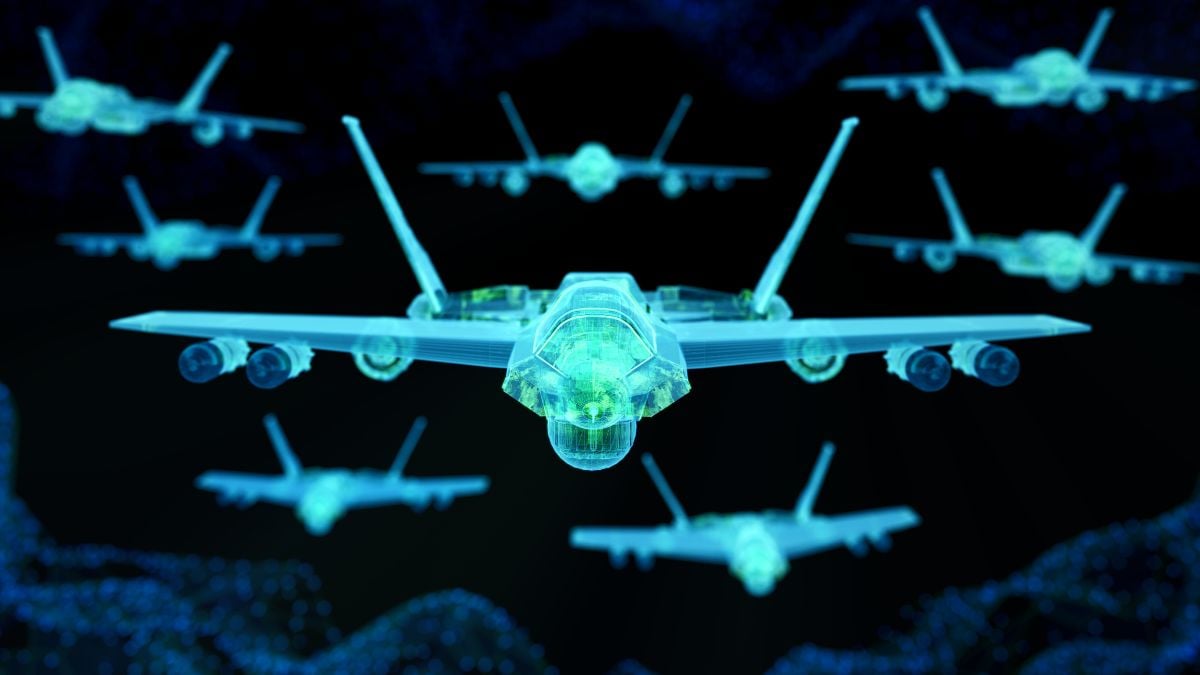
A Mass Drone Failure in Australia Actually Shows How They Work
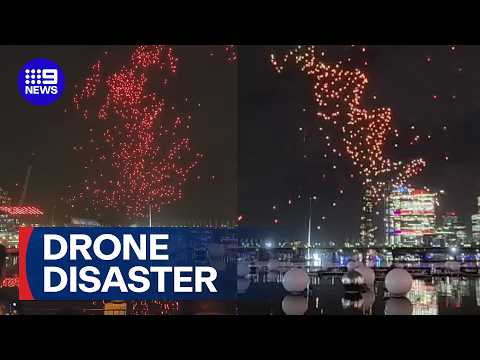
It was clear that something had gone seriously wrong with the thousand-strong swarm of drones twinkling above Darling Harbour during the Vivid Sydney festival last month.
Many suddenly started flying out of formation. Almost 90 fell from the sky and into the dark water below.
Thankfully no one was injured.
Yet the drone show failure, which has been blamed on radio interference, highlighted a challenge facing all autonomous aircraft: what happens when things go wrong?
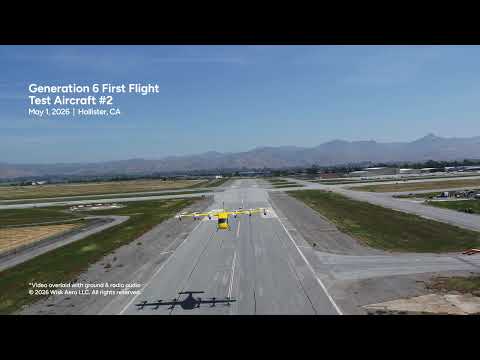
This is an important question, given autonomous air taxis that fly passengers above traffic and autonomous drones that deliver packages across cities could become a familiar sight within the next decade.
In the United States, for example, drone delivery company Wing recently announced it is expanding its partnership with Walmart across seven more cities.
These technologies will occasionally experience failures. But an aircraft cannot simply pull over to the side of the road.
So safety depends not only on preventing failures but on ensuring aircraft can respond safely when they occur.
Designed to tolerate some failures
Modern autonomous aircraft have a range of features to ensure that no single failure leads to the loss of the aircraft. These include multiple motors, distributed propulsion, backup flight computers and software that can tolerate faults.
But even highly reliable and resilient technologies can and will fail in unexpected ways. A minor software problem, a faulty sensor or a sudden change in conditions may not be serious on their own. But together they can create larger challenges.
Cities create further risk. Changing winds around buildings, interruptions to navigation signals and large numbers of aircraft operating in the same area can all make it harder to manage unexpected events.

In a conventional aircraft, a pilot is responsible for handling emergencies. If a serious problem occurs, they draw on their training and experience to assess the situation, identify a suitable landing site and guide the aircraft to the ground while minimising risk to people nearby.
In the case of autonomous aircraft, that responsibility shifts from the pilot to the aircraft itself. Autonomous systems must be able to recognise a problem, assess the available options and decide what to do next.
For example, where is the safest place to land? Could people, vehicles or buildings be put at risk? Can the aircraft safely reach the chosen location?
These are not simply technical questions. They are decisions with real-world consequences. Responding to emergencies is therefore not just a backup procedure. It becomes a fundamental part of how autonomous aircraft operate safely.
A system that must see, decide and act
For an autonomous aircraft to respond safely to an emergency, it must do three things very quickly.
First, it needs to understand its surroundings. It must identify possible landing locations while taking account of people, vehicles, buildings and other hazards. This information may be incomplete or constantly changing.
Next, it must decide which option carries the lowest risk. The safest landing site is not always the closest one, and there may be no perfect solution. Instead, the system must choose the option most likely to minimise harm.
Finally, it must safely guide the aircraft to that location. This can be particularly challenging if the aircraft is already experiencing a fault or operating in difficult weather conditions.
These tasks can’t be treated separately. They must work together as a single safety system, making decisions and responding in real time as events unfold.

Planning for things to go wrong
Much of the current focus in industry and regulation is on preventing failures through rigorous testing, certification and backup systems. This is important, but it is only part of the safety challenge.
There’s far less discussion about what happens after a failure occurs. How quickly can an aircraft identify a safe place to land? Can it continue to operate safely if some of its systems are no longer working as intended?
The most resilient systems are not necessarily those that never experience problems.
They are the ones that can recognise emerging issues, adapt to changing circumstances and reduce risk before a situation becomes critical.
In this view, an emergency landing is not a last-minute response. It is a capability that is planned for throughout the flight and ready to be used whenever needed.
Safety is judged on the worst day
Autonomous aircraft have the potential to make transport faster, cleaner and more accessible. But its long-term success will depend on more than technology or economics.
It will depend on whether the public can trust these systems to respond safely when things go wrong.
The recent drone incident at Vivid Sydney festival offers a useful reminder. The failure itself became headlines, but the more important question was how the system responded.
The drones did not simply disappear from the sky. Safety procedures were activated and, most importantly, nobody was injured.
Related: Scientists Built a Robot That Can Beat Elite Human Players at Table Tennis
As autonomous aircraft become more common over our cities, similar questions will arise.
The future of autonomous aircraft will not be decided by how well they perform under normal conditions.
It will be decided by how they handle the rare situations that nobody wants, but everyone expects to be planned for.
Luis Mejias, Associate Professor in Aerospace and Autonomous Systems, Queensland University of Technology and Jonathan Roberts, Professor in Robotics, Queensland University of Technology
This article is republished from The Conversation under a Creative Commons license. Read the original article.
What did you think of this news? Leave a comment below and/or share it on your social media. This way, we can inform more people about the hottest things in technology, science, innovation, and gaming!
This news was originally published in:
Original source
