
A Sea Cucumber’s Amputated Tissue Refuses To Die. Could It Live Forever?
The oceans are home to many of Earth’s longest living creatures.
Glass sponges can survive for more than 10,000 years, and an individual quahog clam can thrive for more than 500.
A few jellyfish, jellies, and hydra are so good at regenerating themselves that they can theoretically live forever.
But the humble sea cucumber has a truly unique longevity trick.
Scientists in Canada have now discovered a sea cucumber species with tissue that may live ‘indefinitely’.
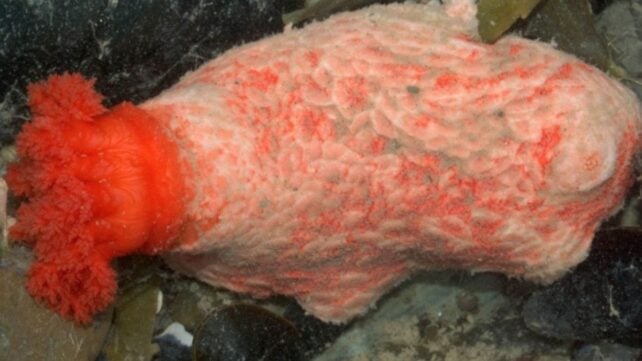
When scientists amputated bits of a scarlet sea cucumber (Psolus fabricii), the tissues refused to die.
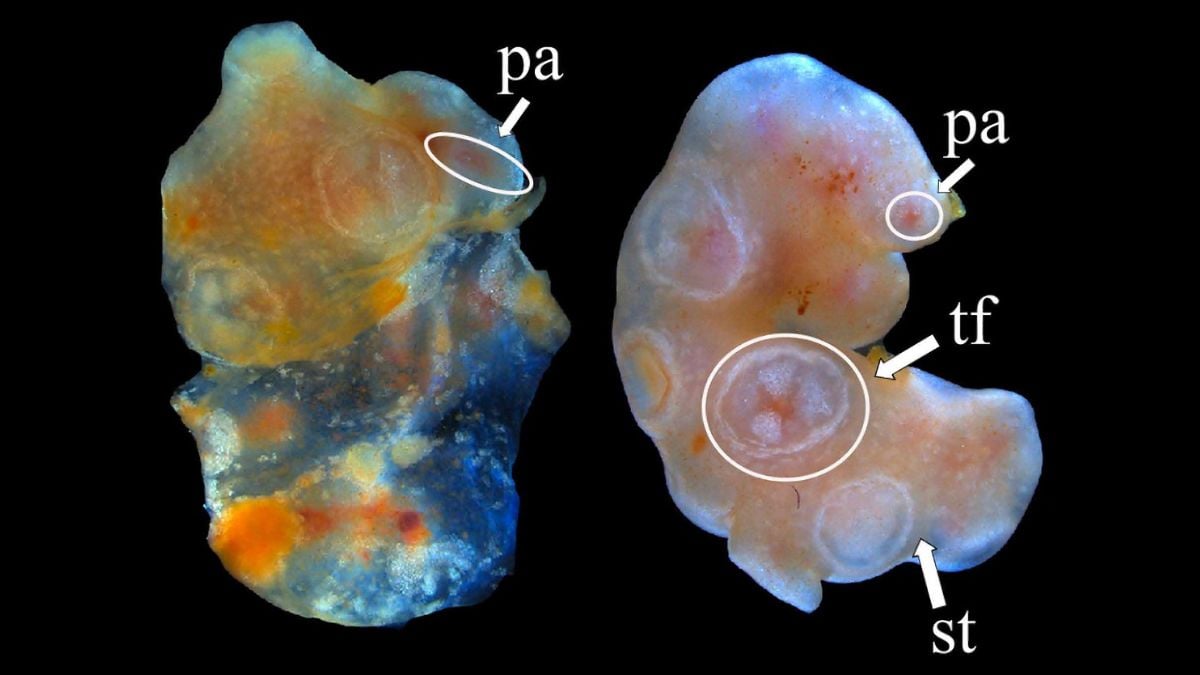
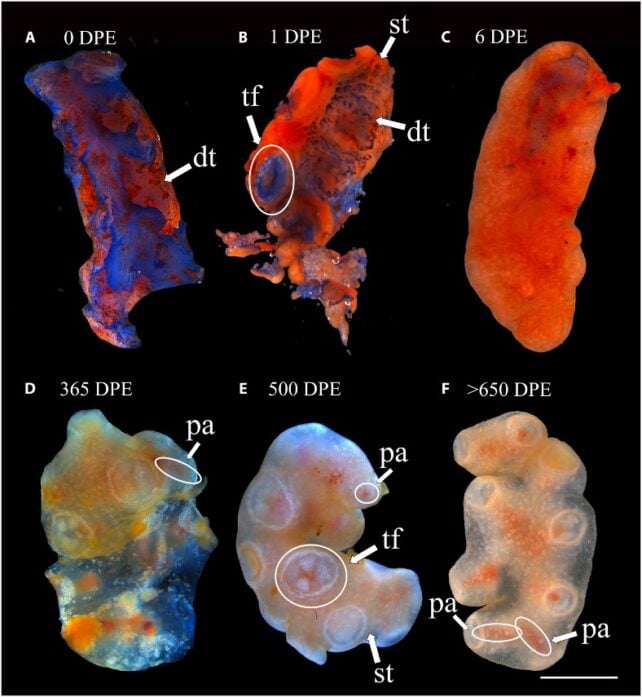
For three years and counting, the isolated tube feet and tentacles have sat all on their own in a tank of natural running seawater, without decaying away.
Not only are they not dead, but these tissues are biologically active and changing.
Many of their immune, metabolic, and cellular processes are still intact.
That’s never been seen before – not from the tissue of any known animal on Earth.
“We haven’t grown a new, complete sea cucumber yet, but we are seeing pretty stunning growth and diversification of cells literally years after this tissue was removed,” explains marine biogeochemist Rachel Sipler from the Bigelow Laboratory for Ocean Science, a nonprofit research institute in the US.
“It’s like a lizard that loses its tail. We know some lizards can grow new tails; we’re talking about whether the tail can grow a new lizard.”
Like many lizards on land, the sea cucumber species, P. fabricii, is a bit of a klutz in the ocean. It regularly loses or injures its tube feet and tentacles, which means it has a potentially great capacity for regeneration.
To test that idea in the lab, Sipler and her colleagues at Memorial University of Newfoundland watched and waited to see what happened to excised bits of this wild-looking sea cucumber.
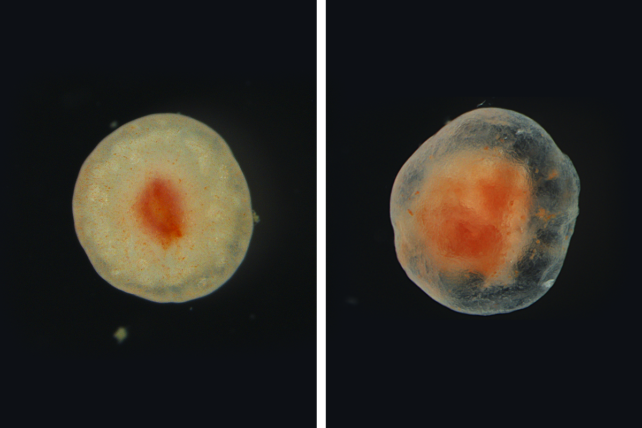
Soon enough, the tissue samples began showing signs of wound repair. Their immune cells appeared to spring into action, and any dead cells were removed.
Repair was then followed by regeneration. Over time, the tissues began to absorb dissolved nutrients from the seawater, growing and restructuring themselves.
Years on, the isolated tentacles can still respond to tactile stimuli, indicating the preservation of a neural network.
This is the first known case of a tissue ‘explant’ surviving and growing long-term in a natural setting, write Sipler and her colleagues.
“Our findings,” they add, “challenge conventional perceptions of tissue immortality.”
They also raise the question: What does it mean for tissue to be alive?
For centuries now, scientists have tried to keep the cells and tissues of living animals functional, even when they are removed from the rest of the body.
While researchers have managed to engineer immortal cell lines from animal and human stem cells, these self-proliferating units must be kept in highly controlled environments, where they are carefully guarded against pathogens.
Keeping a whole bunch of cells alive within a section of tissue is much harder to manage.
Animal tissue is a flexible yet delicate structure; it requires a complex scaffold of communicating cells and a robust nutrient delivery system to keep everything plump.

Even when animal tissue is kept in a special solution to extend its longevity, it typically survives about 9 weeks in the laboratory.
But a bit of P. fabricii could live “indefinitely” in natural seawater, researchers speculate. In fact, it seems to thrive in the natural ‘dirtiness’.
“Natural seawater is just about the most microbially diverse, least clean approach we could take experimentally,” says Sipler.
“Yet, that rich environment full of bacteria and all this organic matter was actually feeding them and allowing this tissue to heal and grow.”
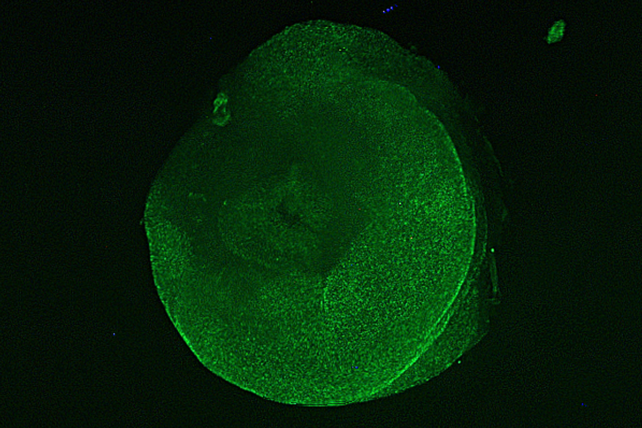
The only other tissue culture that scientists have described as ‘indefinite’ was taken from a chicken embryo, and it did not show the same capacity for healing or survival as the scarlet sea cucumber.
In fact, P. fabricii may be unique even among sea cucumbers.
Sipler and her colleagues tested several other sea cucumbers, but none of their tissue explants survived more than 3.5 months.
“Here is this species that has this groundbreaking ability, and we had no idea,” says Sipler.
“It’s a reminder how much is yet to be discovered in the marine environment.”
Related: Mammals May Have a Hidden Limb Regeneration Ability We Never Knew About
Andrea Bodnar, science director at the Gloucester Marine Genomics Institute, was not involved in the study, but she agrees with the paper’s conclusions.
“The fact that tissue explants from a sea cucumber can heal, reorganize, and survive independently for years in natural seawater suggests an entirely new model for biological resilience and tissue regeneration,” she says.
The study is published in Science Advances.
What did you think of this news? Leave a comment below and/or share it on your social media. This way, we can inform more people about the hottest things in technology, science, innovation, and gaming!
This news was originally published in:
Original source
