
One Type of Dream Could Make Your Sleep Feel More Restful, Study Finds
The vividness of our dreams may be linked to how well-rested we feel upon waking, according to a new study.
Led by a team from the IMT School for Advanced Studies Lucca, in Italy, the study’s authors say their findings could help identify better treatments for sleep problems – and might even help answer the perennial question of why we dream at all.
The researchers enrolled 44 healthy adults in their study and collected data from 196 nights of sleep, with measurements and observations taken in a sleep lab. These participants were regularly woken during ‘dreamless sleep’ phases throughout the night and asked about their dreams and how rested they felt.
Periods of feeling the deepest levels of sleep were reported after both deep unconscious experiences (with no sense of anything) and after vivid, immersive dream experiences – even when brain readings showed activity closer to wakefulness.
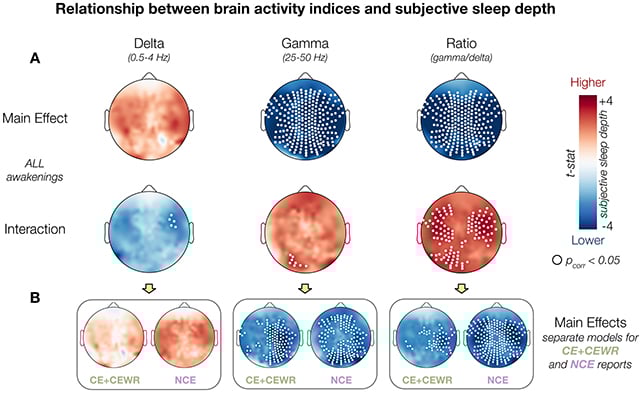
The study participants generally said they felt their sleep was at the other end of the scale – the shallowest levels of slumber – after fragmented experiences in which they felt vaguely present and aware but weren’t actually dreaming.
“In other words, not all mental activity during sleep feels the same,” says neuroscientist Giulio Bernardi, from the IMT School. “The quality of the experience, especially how immersive it is, appears to be crucial.”
“This suggests that dreaming may reshape how brain activity is interpreted by the sleeper: The more immersive the dream, the deeper the sleep feels.”
On one level, this doesn’t make much sense: It seems logical that deep sleep, when brain activity quiets down, and we’re not dreaming, would be most restful.
However, previous studies have found that the REM (rapid eye movement) stage of sleep, during which we’re often dreaming, is consistently associated with subjective reports of a deeper, more restful night’s sleep.

Here, the team focused on stage 2 of NREM (non-rapid eye movement) sleep, or N2, which tends to last longer than the other stages.
The researchers think that vivid dreaming may act as a sort of buffer against fluctuations in brain activity, giving our minds the impression that we’re in deep sleep even if the raw neural activity data doesn’t show it.
This buffer seems to work as we get towards morning, too. The experiments showed that as sleep pressure dropped (that’s our physiological need for sleep), the vividness of dreams increased, and so did feelings of deeper sleep.
“Understanding how dreams contribute to the feeling of deep sleep opens new perspectives on sleep health and mental well-being,” says Bernardi.
“If dreams help sustain the feeling of deep sleep, then alterations in dreaming could partly explain why some people feel they sleep poorly even when standard objective sleep indices appear normal.”
It’s important to bear in mind that the research doesn’t show a causal link, and focuses on subjective sleep depth and sleepiness on awakening, not on objective next-day functioning or physical recovery.
Even with those limitations in mind, there’s lots to take away here. One possibility raised by the findings is that dreaming helps preserve the subjective sense of deep, continuous sleep and lets our brains sort through the day’s emotions and memories.
Related: Daydreaming Could Serve a Vital Purpose We Never Knew About
The study also points to a way to potentially help those who struggle to get enough restful sleep. If future work confirms a causal link, it’s possible that manipulating dreams to make them more immersive and vivid could help combat conditions such as insomnia.
“Interventions aimed at modulating dream phenomena – through controlled sensory stimulation, cognitive techniques, or pharmacological approaches – could help improve the perceived quality of sleep,” says Bernardi.
The research has been published in PLOS Biology.
What did you think of this news? Leave a comment below and/or share it on your social media. This way, we can inform more people about the hottest things in technology, science, innovation, and gaming!
This news was originally published in:
Original source
