
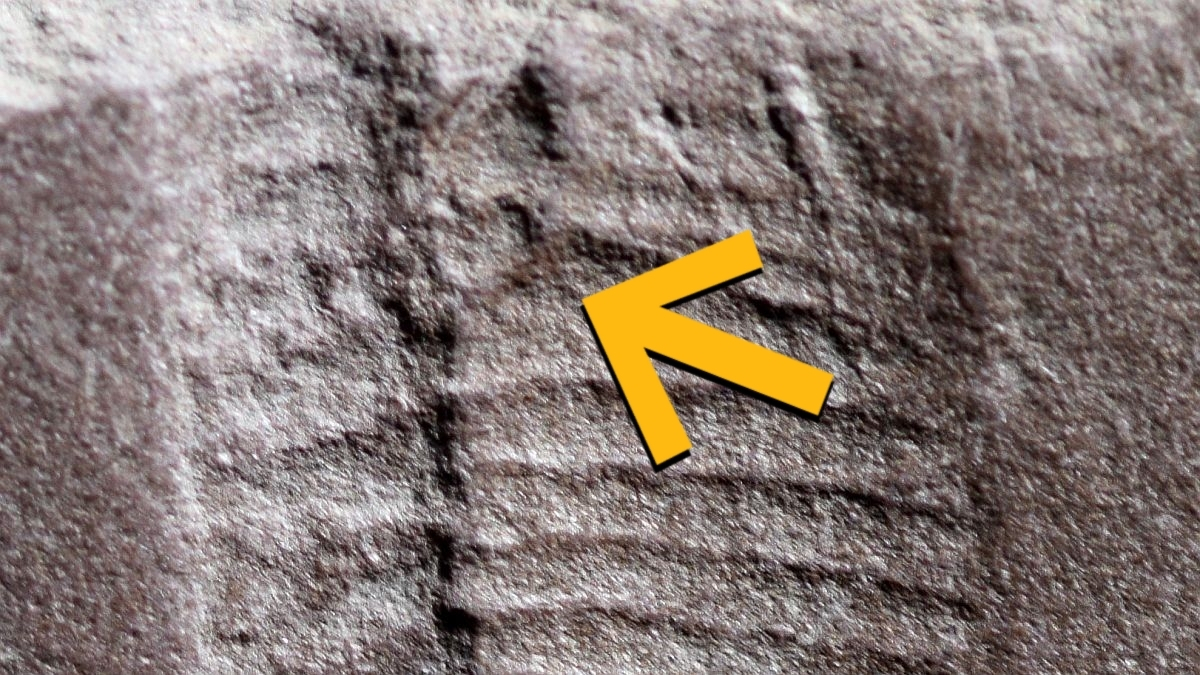
Oldest Fossilized Butthole Found in 290-Million-Year-Old Reptile
Once, long ago, a little reptile going about its business plopped itself down in the mud before getting up and carrying on with its day.
Nearly 300 million years later, that brief rest has yielded the world’s earliest known fossilized imprint of reptile skin, complete with scales and – remarkably – what scientists interpret as the critter’s cloaca, a multi-purpose opening many animals use for pooping, peeing, mating, and laying eggs.
“Such soft-tissue structures are extremely rare in the fossil record – and the further back we look in Earth’s history, the more exceptional they become,” says paleontologist Lorenzo Marchetti of the German Natural History Museum in Berlin.
“The traces from the Thuringian Forest open new perspectives on the early development of reptiles and their skin structures.”
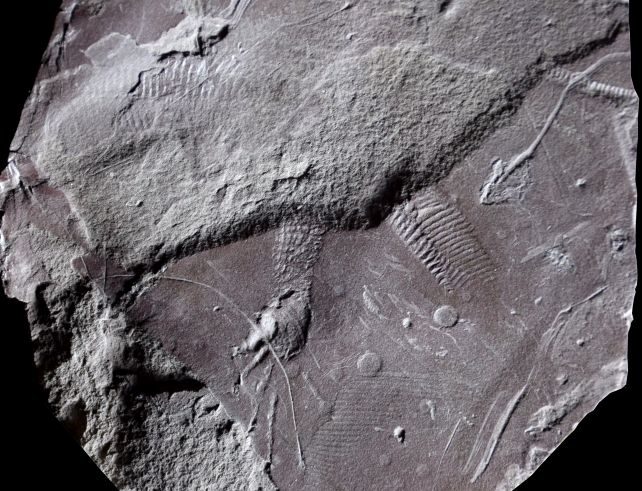
The fossil hails from the sedimentary Goldlauter Formation in Germany’s Thuringian Forest Basin, and an analysis of the impression left behind shows it was made by a reptile about 9 centimeters (3.5 inches) in length.
Marchetti and his team named the trace fossil Cabarzichnus pulchrus, representing a newly described species of reptile resting trace.
Its size and nearby footprints suggest that C. pulchrus was likely a bolosaurian, an early branch of the reptile lineage. It lived around 295 million years ago during the Asselian age of the early Permian, when reptiles were beginning to rapidly diversify.

In the mud, it left a clear impression of what appears to be belly scales, structures made of hard keratin that act as armor. But the real showstopper is at the base of the tail, where modified scales surround a vent-like opening – what appears to be a cloaca.
It smashes the previous record, a Psittacosaurus butthole dated to around 120 million years ago, and now represents “the earliest fossil record of a cloacal vent in amniotes“, the researchers write in their paper, supporting long-held views that the cloaca was present in early reptiles.
Related: Wild New Study Suggests Buttholes Once Had a Very Different Purpose
Interestingly, C. pulchrus‘ cloaca is shaped and oriented differently from that of Psittacosaurus, other dinosaurs, and crocodiles. Instead, it resembles the buttholes of turtles, lizards, and snakes.
The fossil also preserves rows of polygonal skin scales across the trunk, limbs, head, and tail. These are epidermal scales, the researchers found, made of keratin like those of modern reptiles, rather than older bony dermal armor.
“Trace fossils are far more than simple footprints,” Marchetti says. “They preserve anatomical details that would otherwise be completely lost and play a key role in improving our understanding of the evolution of early terrestrial vertebrates.”
The research has been published in Current Biology.
What did you think of this news? Leave a comment below and/or share it on your social media. This way, we can inform more people about the hottest things in technology, science, innovation, and gaming!
This news was originally published in:
Original source
